
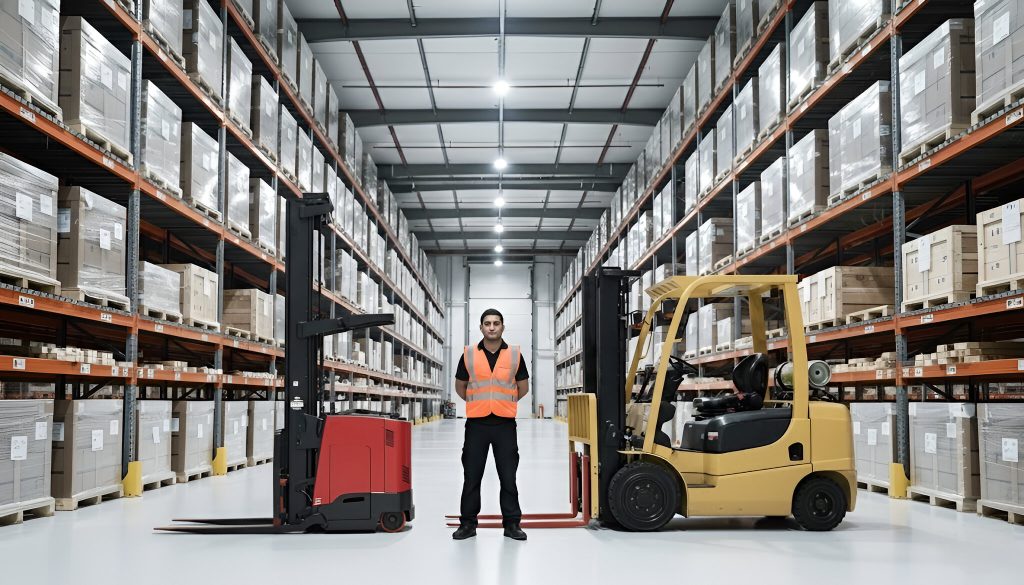
A reach truck is a narrow-aisle, indoor-focused lift designed to place and retrieve pallets in high racking by extending its forks forward. A standard forklift (often called a fork truck) is typically a counterbalanced, more general-purpose machine built for moving loads across varied areas, including docks and outdoor yards.
That difference sounds simple, but it is now a strategic choice as warehouses push for denser storage, faster throughput, and less downtime tied to fork truck service.
Key Takeaways
✔ Reach trucks handle high racking in narrow indoor aisles; forklifts handle general lifting, docks, and yards.
✔ Reach truck vs forklift comes down to aisle width and storage density.
✔ Reach trucks excel at precise put-away and retrieval at height.
✔ Forklifts excel at versatile transport across mixed environments.
✔ Choose by workflow, then protect uptime with solid fork truck service.
Table of Contents
What Is a Reach Truck?
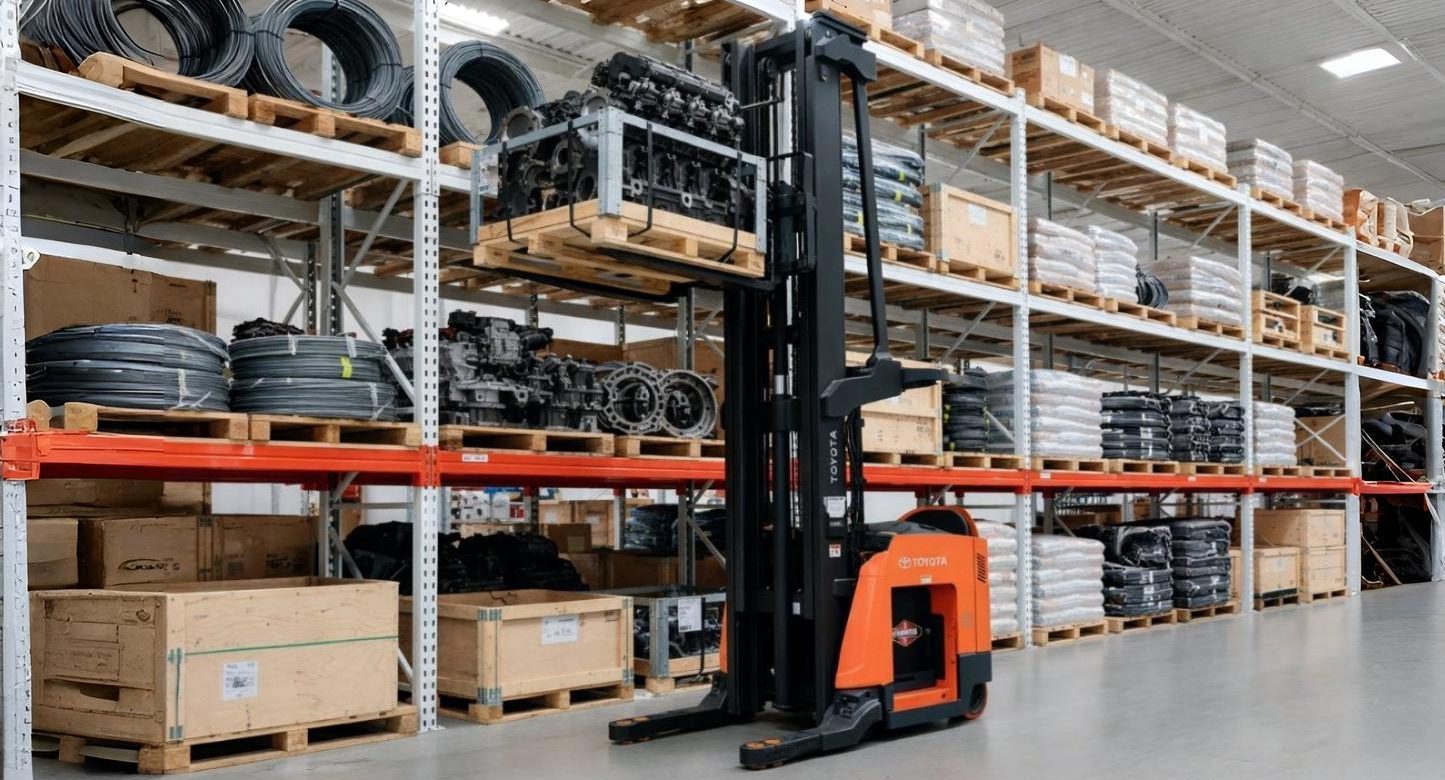
What is a reach truck? It is a type of powered industrial truck built for high-density pallet storage. The defining feature is the ability to “reach” into racking: the forks extend forward so the truck can retrieve or place a pallet without needing the entire vehicle to enter deep into the rack face.
OSHA specifically ties narrow-aisle storage to equipment like reach trucks and order pickers, noting that narrow-aisle systems increase storage space but require specialized trucks to operate in tighter aisles.
Common business uses for reach trucks include:
- High-bay pallet racking in distribution centers
- Retail back-of-house and replenishment areas with tall storage
- Facilities prioritizing storage density over open-floor maneuverin
Pros and Cons of Reach Trucks
Pros
Higher Storage Density in Narrow-Aisle Layouts
Reach trucks are designed to work in tighter aisles, which can free up more square footage for racking instead of travel lanes. That is one reason they are common in high-density warehouse designs.
Strong Put-Away and Retrieval at Height
The reach mechanism and stable, racking-focused handling make them well-suited for frequent pallet placement and retrieval in tall selective racking, especially when accuracy matters.
Better Use of Existing Space
If your building footprint is fixed, reach trucks can support a layout that increases pallet positions without adding square footage, assuming your racking and aisle plan are designed for narrow-aisle operation.
Cons
Primarily Indoor Use
Reach trucks are typically built for smooth indoor floors and controlled conditions, so yard work, uneven pavement, and weather exposure can be limiting.
Less Effective for Dock and Trailer Work
Many operations still prefer counterbalance forklifts for trailer loading, dock staging, and quick transport between zones because they handle those transitions more naturally.
More Specialized Fleet Planning
If your workflow includes both heavy dock activity and high-rack picking, you may need separate equipment types, which can increase training coordination, parts planning, and service scheduling.
Quick Facts: Reach Truck vs Forklift
Reach Truck (Reach Forklift)
Forklift (Fork Truck)
|
What Is a Forklift (Fork Truck)?
A forklift, also called a fork truck, is a powered industrial truck designed to lift and carry loads on forks. OSHA’s powered industrial truck rule covers “fork trucks” and other specialized industrial trucks, and it addresses design, maintenance, and use.
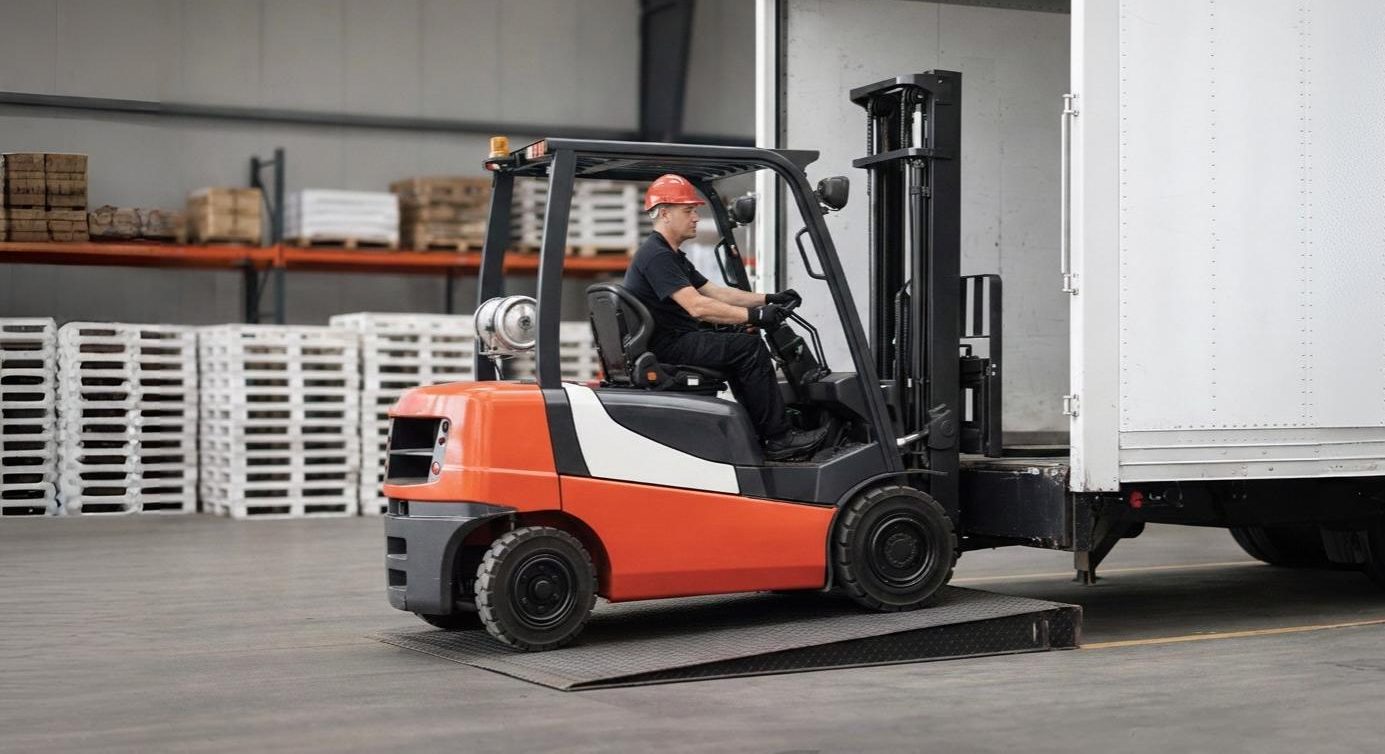
In most business settings, “forklift” often refers to counterbalanced forklifts (electric or internal combustion) that are versatile across:
- Loading docks and trailer work
- General warehouse transport
- Manufacturing floors
- Outdoor yards and mixed surfaces (depending on model and tires)
Pros and Cons of Forklifts
Pros
Versatile Across Workflows
Forklifts are commonly used for receiving, staging, dock work, loading trailers, and general pallet transport, which makes them a strong all-around choice for mixed operations.
Fits More Environments With the Right Setup
Depending on tires, power source, and mast configuration, forklifts can run indoors, outdoors, or across both, which helps when your facility has varied surfaces or traffic areas.
Simplifies Standardization
Many businesses find it easier to standardize daily use and operator training across departments when one forklift type covers most tasks, while still meeting OSHA training and evaluation requirements.
Cons
More Aisle Space in Racking Layouts
Standard counterbalance forklifts typically require wider aisles to turn and position loads, which can reduce the number of pallet locations you can fit into the same building.
Less Efficient for Narrow-Aisle Precision at Height
In tight aisles and high racking, forklifts may require more repositioning and clearance, which can slow down put-away and retrieval compared with reach-focused equipment.
Storage Density Trade-Off
If you keep aisles wide to preserve flexibility, you often give up racking space. Over time, that “just in case” layout can quietly cap capacity and force earlier expansion.
Reach Truck Vs Forklift: Key Differences Explained
Design and Maneuverability
OSHA notes that conventional rack systems were designed around counterbalanced trucks that typically need about a 12-foot aisle width, while narrow-aisle systems require reach trucks that work in much narrower aisles. This is the operational heart of the reach truck vs forklift decision: aisle width and turning space.
Lift Height and Racking Capability
Reach trucks are designed for vertical work in racking. Many operations choose a reach truck specifically to access higher storage positions and improve cube utilization. (Exact lift height depends on the model, mast, and load.) A practical rule: reach equipment is commonly chosen when racking height and precision placement matter more than outdoor versatility.
Indoor vs Outdoor Use
A reach truck is primarily an indoor machine. A counterbalanced forklift can be configured for indoor, outdoor, or mixed use depending on power type, tires, and site conditions. If you routinely cross dock thresholds, deal with uneven pavement, or stage materials outside, a forklift often fits better.
Operator Position and Visibility
Many reach trucks are stand-up designs intended for frequent on-and-off cycles and tight maneuvering. Many standard forklifts are sit-down, though stand-up counterbalance models exist. Visibility and ergonomics vary by model, but reach truck layouts are typically built around narrow-aisle precision and racking work.
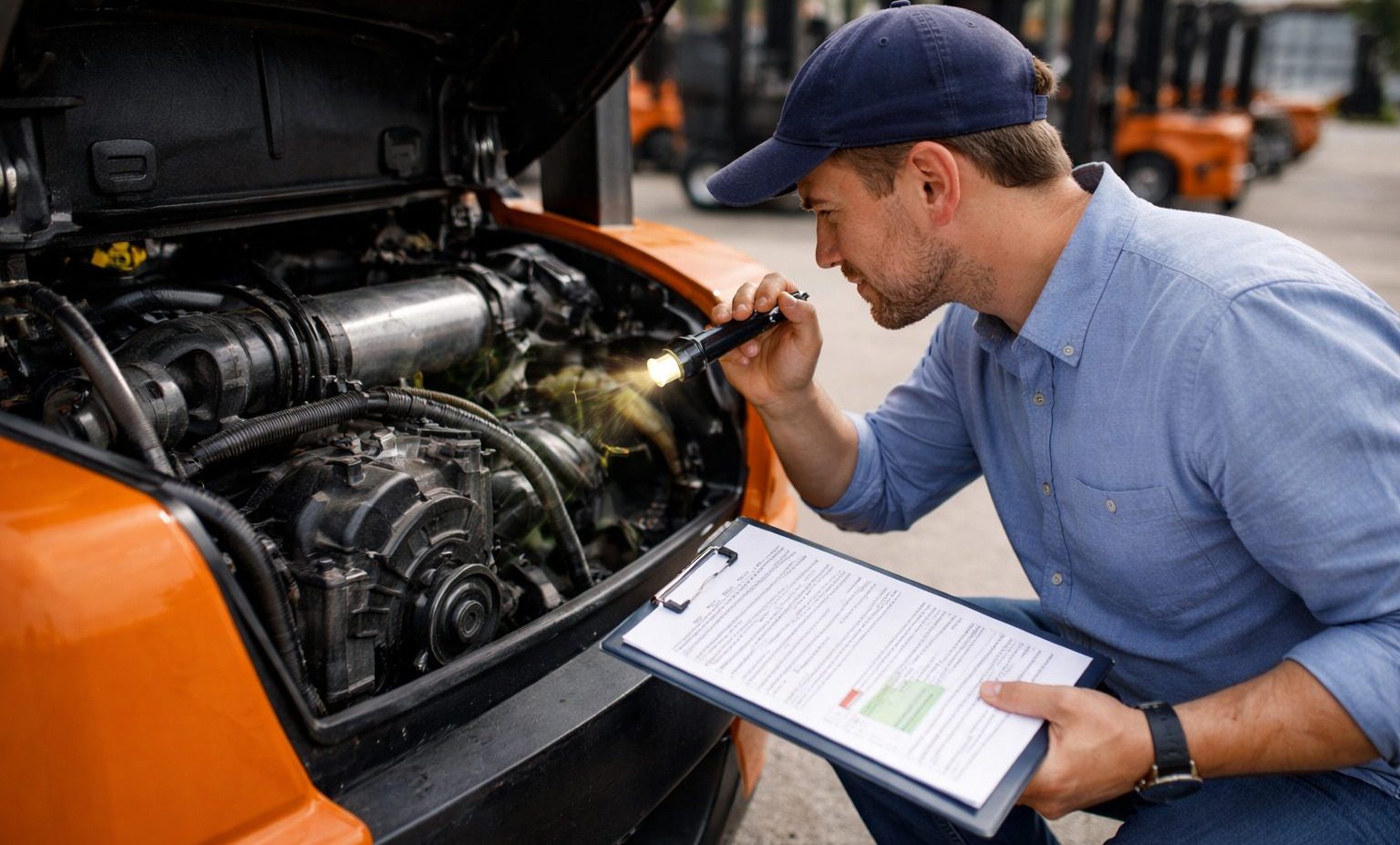
Fork Truck Service and Maintenance Considerations
What Maintenance Looks Like for Reach Trucks
A reach truck is built for repetitive racking cycles, tight steering corrections, and frequent lift work at height. That duty pattern often shifts wear toward components tied to lift control and precision handling.
- Lift And Hydraulic Systems: More frequent high-lift cycles can increase inspection needs for hoses, seals, and mast components.
- Battery And Charging Practices: Many reach trucks are electric, so battery health, watering schedules (if applicable), and charging habits can impact runtime and long-term cost.
- Tire And Floor Condition Sensitivity: Smooth-floor performance is a strength, but damaged concrete and debris can affect stability and tire wear.
What Maintenance Looks Like for Forklifts
A counterbalance forklift is often exposed to dock plates, trailer floors, mixed surfaces, and outdoor conditions. That can increase wear on traction and braking components.
- Tires And Brakes: Dock work and uneven surfaces can accelerate wear compared to a racking-only environment.
- Cooling And Filtration: In dusty yards or outdoor staging, filters and cooling systems may need more attention.
- Forks And Attachments: Heavier handling and varied loads mean regular fork inspection matters for safety.
How to Choose Between a Reach Truck and a Forklift
The reach truck vs forklift decision is usually decided by layout and workflow, not preference.
Choose a Reach Truck When
A reach forklift setup fits best when your facility is designed around racking efficiency.
- You Need Narrow Aisles: You are prioritizing storage density over open-floor maneuvering.
- Your Work Is Racking-Heavy: Put-away and retrieval at height are daily tasks.
- Your Facility Is Primarily Indoor: You do not rely on yard movement or rough surfaces.
If your team keeps asking what is a reach truck, the simplest answer is this: it is the tool built for precision pallet handling in tall racking and tight aisles.
Choose a Forklift When
A standard forklift is often the better fit when versatility drives the schedule.
- You Are Dock-Driven: Loading, unloading, and staging happen all day.
- You Operate In Mixed Environments: Indoor and outdoor movement is routine.
- You Want One Truck To Cover More Jobs: Fewer equipment types can simplify training and maintenance planning.
Many businesses land on both: forklifts for docks and transport, and reach trucks for racking. That combination can be the most practical answer to reach truck vs forklift when your operation does it all.
How to Choose the Right Provider for Reach Trucks and Forklifts
A strong partner should help you avoid overbuying, reduce downtime, and make sure your fleet fits how your operation actually works.
- Proves Fit Before Selling: They ask about aisle width, racking height, load weights, and duty cycle before recommending a reach truck or forklift.
- Supports Both Truck Types Well: They service reach trucks and standard forklifts confidently, with technicians and parts access that match your mix.
- Offers Clear Fork Truck Service Standards: They can explain preventive maintenance scheduling, response times, and what support looks like when a truck goes down.
- Understands Your Workflow: They talk through docks, staging, indoor travel paths, and any outdoor movement so the recommendation works in real life.
- Plans for Growth: They can help you scale from one forklift to a mixed reach truck forklift fleet as storage density and order volume change.
- Is Local and Accountable: A nearby provider can reduce delays and make service coordination easier when uptime is on the line.
Frequently Asked Questions (FAQs)
What class of forklift is a reach truck?
A reach truck falls under Class II: Electric Motor Narrow Aisle Trucks, which are designed for tight aisles and high racking in indoor warehouse environments.
Is an order picker the same as a reach truck?
No. An order picker lifts the operator along with the load so individual items can be picked from shelving, while a reach truck lifts full pallets and is used primarily for put-away and retrieval in racking.
What is the difference between a reach truck and a FLT?
A reach truck is built for narrow aisles and high racking, using extending forks for precise pallet placement. An FLT, or forklift truck, typically refers to a counterbalance forklift designed for general material handling, wider aisles, and dock or yard work.
What is the difference between reach and standard forklifts?
Reach forklifts are optimized for vertical storage and tight aisles in indoor warehouses. Standard forklifts are more versatile, require wider aisles, and are commonly used for transport, staging, and outdoor or mixed-environment tasks.
What are the three types of forklifts?
The three broad categories are:
- Counterbalance forklifts for general lifting and transport
- Reach trucks for narrow-aisle, high-racking applications
- Pallet trucks and order pickers for short-distance movement and picking tasks
Take the Next Step With the Right Lift Plan
Choosing between a reach truck and a standard forklift comes down to how your facility is built and how your team moves product.
If you want help matching equipment to your layout and workload, Almeida Forklifts supports businesses in and around Lauderdale Lakes, FL, with reach trucks, forklifts, and dependable fork truck service to keep fleets running.
Reach out to explore our services.