
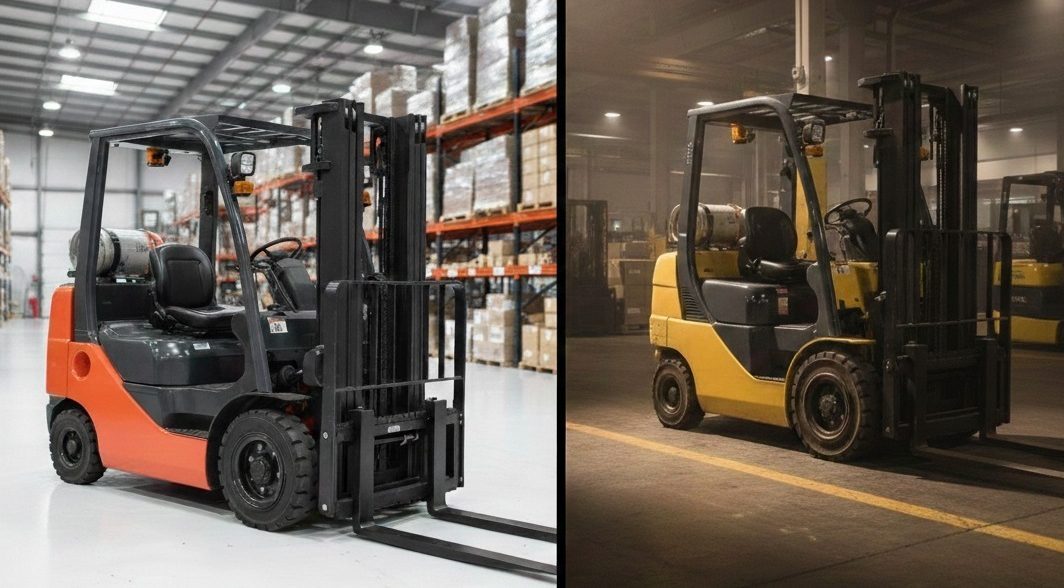
Forklift rental suits short-term needs, seasonal peaks, or testing new tech, offering flexibility, no maintenance worries, and the latest models, while buying is better for consistent, long-term use (18-24+ months), providing lower total ownership cost, asset building, and stable fleet size, but requires capital, maintenance, and managing depreciation.
Your choice depends on operational consistency, financial strategy (cash flow vs. long-term value), and need for modern technology versus predictable costs.
Key Takeaways
✔ Forklift rental works best for short-term projects, seasonal spikes, or unpredictable demand without long-term commitment.
✔ Buying a forklift is usually more cost-effective for steady, daily use over 18 to 24 months or longer.
✔ Rental providers typically handle maintenance and repairs, while ownership requires budgeting for service, storage, and depreciation.
✔ Forklift leasing can be a practical middle option when predictable payments are needed without full upfront costs.
✔ Planning ahead, right-sizing equipment, and training operators helps reduce forklift rental costs and avoid extra fees.
Table of Contents
What Is Forklift Rental?
Forklift rental provides short-term access to equipment without locking a business into long-term ownership. Forklifts can be rented for a day, a week, or several months, which fits seasonal surges, temporary projects, and changing workloads.
Many providers also handle maintenance and repairs, and rental fleets often include newer models with updated safety features. Demand has grown even more as e-commerce continues to expand, pushing warehouses and distribution centers to scale equipment up or down quickly to keep up with higher order volume.
What Does It Mean to Buy a Forklift?
When companies buy forklifts, they take full ownership and responsibility for the equipment. That includes upfront capital cost, maintenance, repairs, storage, and depreciation.
Buying usually makes the most financial sense for operations with steady, daily forklift use over the long term, since the cost per hour often drops below ongoing rental rates. The tradeoff is less flexibility if needs change or technology advances.
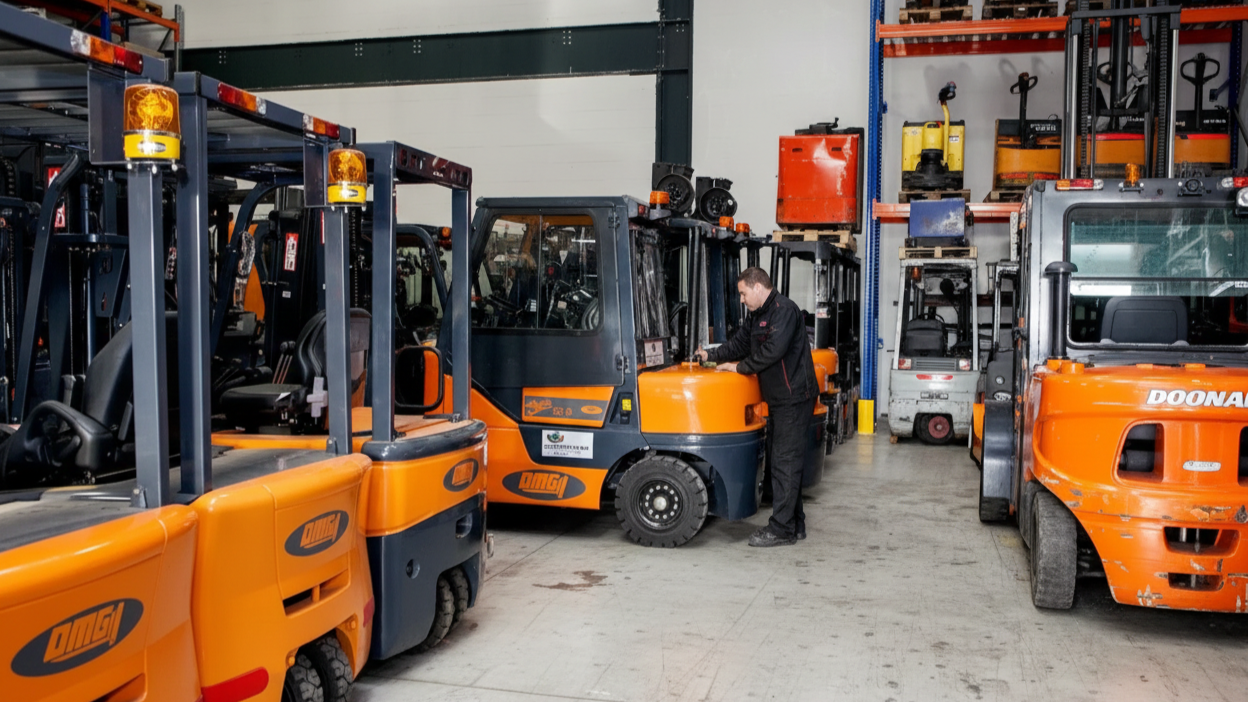
Forklift Rental vs Buying: Quick Comparison
|
Factor |
Forklift Rental |
Buy Forklifts |
|
Best for |
Short-term, seasonal, or unpredictable needs |
Consistent, long-term daily use |
|
Upfront cost |
Low |
High |
|
Monthly cost structure |
Pay-as-needed |
Ownership costs spread over time |
|
Maintenance/repairs |
Usually handled by provider |
Owner responsible |
|
Equipment flexibility |
Easy to swap or upgrade |
Limited once purchased |
|
Technology access |
Often newer models available |
Can age over time |
|
Availability |
May vary during peak demand |
Always on-site if owned |
|
Long-term cost |
Can add up if used constantly |
Often lower over 18–24+ months |
When Forklift Rental Is the Right Choice
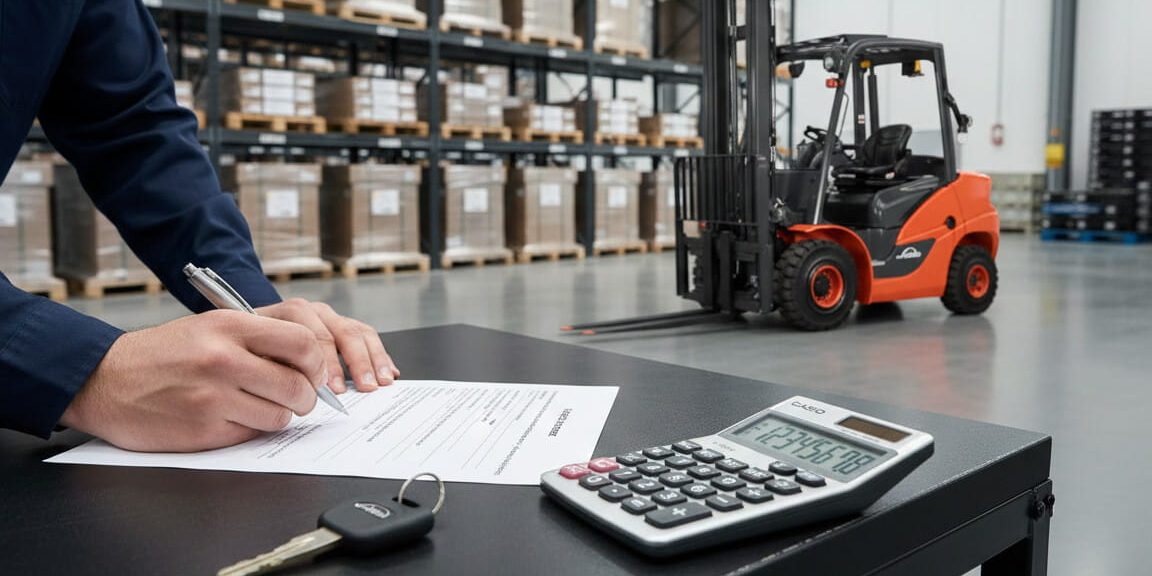
Short-Term or Seasonal Needs
Forklift rental is often the smartest choice for short-term demand. Seasonal peaks in retail, agriculture, or logistics can double equipment needs for a few months. Buying equipment for these spikes usually leads to underutilized assets once demand slows.
Forklift rental allows businesses to scale up quickly and scale down just as easily. This flexibility prevents unnecessary capital spending while keeping operations running smoothly.
Budget Flexibility and Cash Flow Management
Cash flow matters, especially for growing businesses. Forklift rental avoids large upfront costs and spreads expenses evenly across the rental period. This pay-as-you-go structure supports financial flexibility and preserves capital for hiring, inventory, or expansion.
For companies focused on liquidity, forklift rental offers a way to maintain operational capacity without tying up cash in depreciating assets.
Access to the Latest Forklift Technology
Technology changes faster than many expect. Safety systems, emissions standards, and electric forklift performance continue to evolve. Forklift rental provides access to modern equipment without the risk of being stuck with outdated technology.
Many businesses choose forklift rental specifically to meet safety compliance requirements or to test electric forklifts before making a long-term commitment.
Maintenance-Free Operation
Maintenance is one of the most overlooked costs of ownership. Repairs, scheduled service, and unexpected breakdowns can disrupt operations and inflate budgets.
With forklift rental, maintenance responsibility stays with the provider. This reduces downtime, eliminates surprise repair bills, and simplifies internal planning.
Trial Period Before Commitment
Forklift rental also functions as a testing ground. Businesses exploring whether to buy or lease forklift equipment often rent different models to evaluate performance in real working conditions. This trial approach reduces the risk of purchasing equipment that does not fit the operation.
When Buying a Forklift Makes More Sense
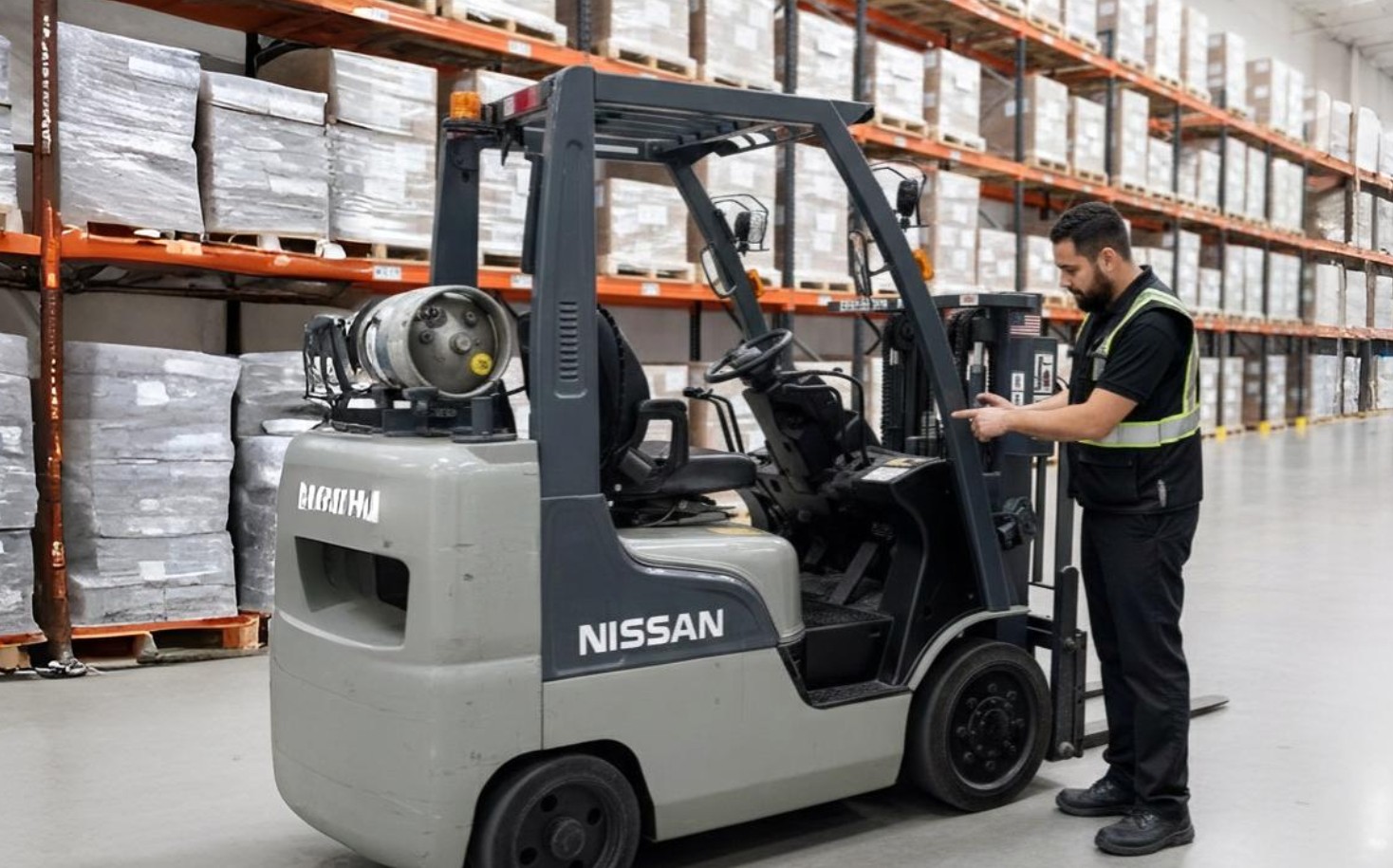
Heavy, Consistent Daily Use
When forklifts are used eight hours a day, five days a week, ownership usually becomes more economical. Over time, rental costs accumulate quickly, making buying the smarter financial decision.
Companies that buy forklifts for high-use environments benefit from predictable availability and full control over their fleet.
Lower Long-Term Cost of Ownership
For long-term operations, buying equipment typically results in a lower total cost. Once the initial investment is spread over years of use, ownership costs often undercut forklift rental rates.
This is especially true when maintenance is managed efficiently and equipment is used at high capacity.
Asset Building and Equity
When businesses buy forklifts, they build tangible assets. Owned equipment can be resold, traded in, or used as collateral. While forklifts depreciate, they still retain value, which can support long-term financial planning.
Stable, Predictable Operations
Facilities with steady workflows benefit from ownership. When demand does not fluctuate dramatically, owning equipment ensures consistent access without worrying about rental availability during peak periods.
Potential Tax Advantages
Ownership may offer tax benefits through depreciation. These advantages vary based on financial structure and tax strategy, so professional advice is recommended. For some businesses, these deductions significantly offset ownership costs.
Financial and Operational Considerations You Shouldn’t Ignore
Financial Treatment
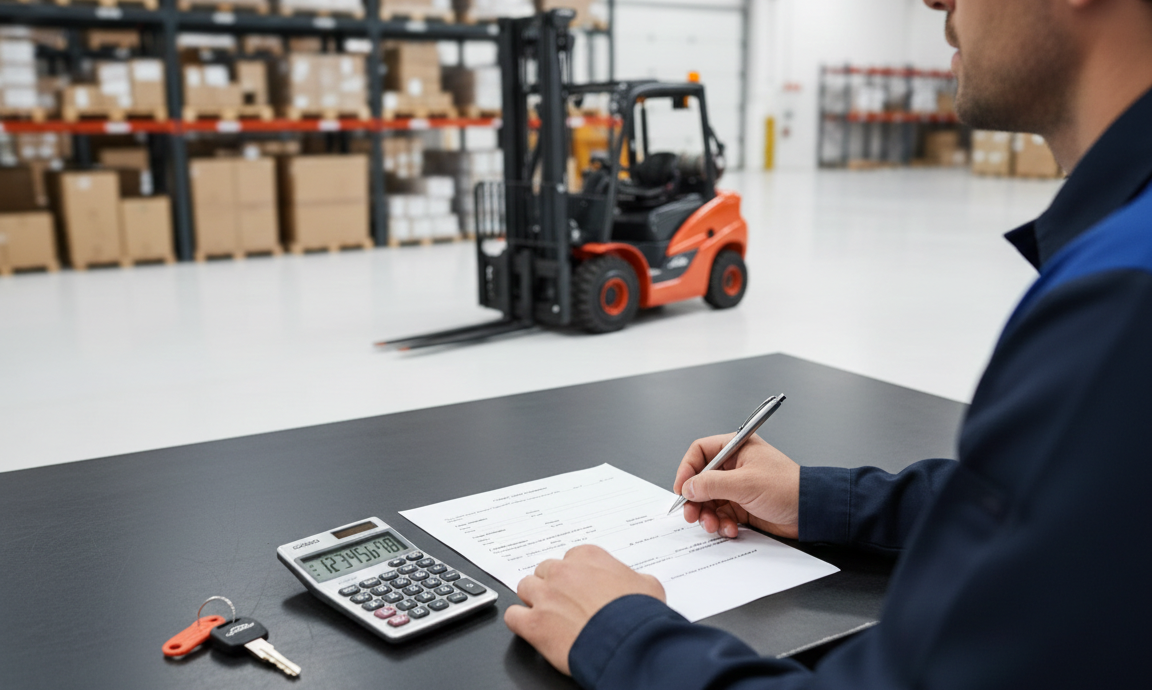
Forklift rental is classified as an operating expense, making it easier to deduct and budget on a monthly basis. Buying equipment is a capital expense, which requires depreciation over time.
Forklift leasing introduces another layer of flexibility. Depending on the structure, forklift leasing may be treated similarly to rental or ownership for accounting purposes.
Technology Lifecycle
Forklift rental makes upgrading easy. Buying equipment means holding onto technology longer, even as newer models improve efficiency and safety. Forklift leasing can help bridge this gap by allowing upgrades at the end of lease terms.
Equipment Availability
During busy seasons, forklift rental availability can tighten. Ownership eliminates this risk. Some companies choose a hybrid approach, owning core equipment while relying on forklift rental for overflow demand.
Do You Need Insurance When Renting a Forklift?
Most forklift rental providers require proof of insurance before releasing equipment. That typically includes general liability plus coverage for the rented forklift if it is damaged.
Construction equipment rental insurance can help cover rented tools and equipment and may pay to repair or replace items damaged by covered events like theft, vandalism, or certain natural disasters. Damage waivers may help, but they often have limits, so they should not replace proper coverage.
What Are Some Ways to Save Money on Forklift Rentals?
Saving on a forklift rental usually comes down to planning and right-sizing. The goal is to avoid paying for more machine, more time, or more extras than the job actually needs
Choose the Right Capacity and Setup
Renting a forklift with extra lift capacity, special tires, or attachments can raise the price fast without improving output. Match the lift height, capacity, and fuel type to the real workload so the forklift rental stays efficient and cost-effective.
Book Early to Avoid Premium Pricing
Last-minute rentals often cost more, especially during busy seasons. Planning ahead gives more options, better rates, and fewer compromises. Early scheduling keeps the forklift rental predictable instead of rushed.
Pick the Most Cost-Effective Rental Term
Short-term rates can look cheaper upfront, but the per-day cost is often higher. If the equipment will be needed for weeks, a longer term can reduce the daily rate and cut extension fees. For longer ongoing needs, fork lift lease may offer steadier monthly costs than repeating rentals.
Prevent Damage Fees With Operator Training
Damage and misuse are common cost drivers. Trained operators reduce incidents, downtime, and surprise charges, helping the forklift rental stay on budget while keeping productivity steady.
Limit Add-Ons to What the Job Requires
Delivery upgrades, attachments, and extra services add up quickly. Only choose add-ons that directly support the job. If the same setup is needed repeatedly, a lease to own forklift may be worth comparing against frequent rentals.
Frequently Asked Questions
Can a business switch from renting to owning later?
Yes, many businesses start with forklift rental and move to ownership once usage becomes more predictable. Renting first helps confirm the right lift capacity, fuel type, and duty cycle before committing capital. Another option is a forklift lease to own, which allows payments to build toward ownership while keeping flexibility. This approach reduces the risk of ending up with equipment that no longer fits as operations grow or change.
How long does it usually take to get a rented forklift delivered?
Delivery timelines vary based on location, equipment type, and seasonal demand. In many areas, a forklift rental can be delivered within one to three business days. During peak periods, specialized models may take longer, which is why early planning is important.
What happens if a rented forklift breaks down during use?
Most forklift rental agreements include service and repair support from the provider. If a breakdown occurs due to normal use, the rental company typically handles repairs or provides a replacement. Downtime policies vary, so it is important to review service response terms before renting.
Is renting forklifts common for multi-location operations?
Yes, companies with multiple facilities often rely on forklift rental to support temporary or shifting demand across locations. Renting allows equipment to be deployed where it is needed without moving owned assets between sites. This approach also simplifies fleet management across regions.
Do rental forklifts come inspected and certified?
Reputable rental providers inspect and service equipment before delivery. Forklifts are typically provided in a compliant working condition with required documentation. Businesses are still responsible for daily checks and safe operation once the equipment is on-site.
Rent and Buy Forklifts Built for Real Jobsite Demands!
Almeida Forklifts offers dependable forklift rental and purchase options for warehouses, construction sites, and industrial operations in Lauderdale Lakes, FL. Our fleet is well maintained, available for short-term or seasonal needs, and supported by responsive local service, while purchase options fit long-term use and stable operations. With local support in Lauderdale Lakes, FL, businesses get flexible terms and equipment that is ready to perform, backed by a provider trusted across Lauderdale Lakes, FL.
Contact Almeida Forklifts today to check availability or request a quote to rent or buy.