Table of Contents
Key Takeaways
✔ Class I forklifts are battery-powered, quiet, and emission-free, making them the top choice for indoor warehouses and distribution centers.
✔ Class II forklifts, including reach trucks and order pickers, are built for narrow aisles and maximize storage capacity in high-density warehouses.
✔ Class III forklifts, such as pallet jacks and stackers, are cost-effective, compact, and ideal for short-distance load movement in small facilities.
✔ Class IV forklifts use combustion engines with cushion tires, offering strong lifting power for heavy materials on smooth indoor surfaces.
✔ Class V forklifts are rugged, IC-powered machines with pneumatic tires designed for outdoor use on rough terrain and heavy-duty loads.
✔ Class VI tractors are tow vehicles powered by electric or IC engines, making them efficient for repetitive hauling tasks in warehouses, factories, and airports.
✔ Class VII forklifts are heavy-duty, off-road machines with high capacity and stability, perfect for construction, agriculture, and logging operations.
Forklifts are essential machines in logistics, construction, and warehousing. They make it possible to lift, move, and organize heavy loads efficiently, reducing manual labor and improving workplace safety. However, not all forklifts are the same.
That’s why understanding the different types of forklift equipment is so important. Each model is built for particular environments and tasks, and knowing the distinctions can save businesses time, money, and unnecessary wear on their equipment.
The 7 Types of Forklifts and Their Uses
With North America holding a 27.8% share of the global forklift market as of 2025, the demand for reliable material handling equipment continues to grow across industries. This strong industrial base highlights how essential forklifts are for warehouses, manufacturing plants, construction sites, and distribution centers.
To meet these diverse needs, different types of forklift models have been developed, each with specific designs, capabilities, and applications.
Class I: Electric Motor Rider Trucks
Class I models are some of the most widely used types of forklift equipment. These trucks run on industrial batteries and use electric motors, making them quiet, efficient, and well-suited for indoor environments. Depending on the model, operators can sit or stand while driving, which offers flexibility in high-traffic facilities.
Uses
- Ideal for warehouses and distribution centers that prioritize clean air
- Common in food, beverage, and pharmaceutical industries where emissions are restricted
- Effective for loading docks and pallet transport in indoor spaces
Advantages
- Zero emissions make them safe for enclosed facilities
- Lower maintenance costs compared to internal combustion machines
- Compact maneuverability, allowing operators to work in narrow aisles without difficulty
Because of their balance between power and efficiency, these trucks are often the standard choice for warehouse forklifts. Companies that need reliable indoor equipment for pallet movement and stacking frequently turn to Class I models.
Class II: Electric Motor Narrow Aisle Trucks
Class II forklifts are designed for efficiency in tight storage spaces. This forklift classification includes reach trucks, order pickers, and turret trucks. These machines are slimmer and more agile than traditional units, enabling them to operate in narrow aisles where standard forklifts cannot fit.
Uses
- High-density storage facilities
- Warehouses that maximize vertical shelving systems
- Environments where frequent pallet picking is required
Advantages
- Increases storage capacity by making use of vertical space
- Highly maneuverable, reducing the need for wide aisles
- Boosts productivity in distribution centers by allowing fast stacking and retrieval
These machines are a vital part of modern material handling equipment types, designed to optimize warehouse layouts and support high-volume storage. Their versatility also explains why forklifts with capacities of up to 5 tons led the market in 2024, making up a dominant 50.3% share.
Class III: Electric Motor Hand Trucks
Also known as walkie pallet jacks or electric stackers, Class III equipment is powered but manually operated. Unlike larger models, the operator walks behind or beside the machine, controlling it via a handle. This compact design makes them an efficient type of forklift for small-scale operations.
Uses
- Loading and unloading pallets from delivery trucks
- Moving inventory short distances inside warehouses
- Feeding production lines with materials
Advantages
- Cost-effective option for small businesses or startups
- Compact and easy to maneuver, especially in crowded warehouse spaces
- Minimal training required, making them accessible to new employees
For many businesses, these are the first warehouse forklifts they purchase. Their low cost and simplicity make them attractive for operations that don’t require heavy-duty lifting.
Class IV: Internal Combustion Cushion Tire Forklifts
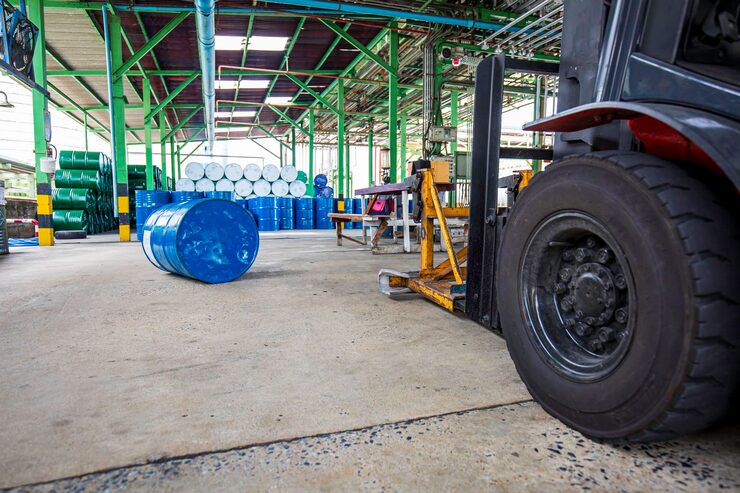
Class IV trucks are powered by internal combustion engines fueled by propane, gasoline, or diesel. They feature cushion tires that work best on smooth indoor surfaces. These models are stronger than electric forklifts and capable of handling bulkier inventory.
Uses
- Manufacturing plants with heavy materials
- Warehouses with concrete floors and indoor workspaces
- Handling large or awkwardly shaped loads that require more power
Advantages
- High power output for demanding applications
- Durable construction that supports continuous operations
- Versatile design, making them useful in various industries
These are among the most reliable industrial forklifts for companies that need equipment capable of running long hours under tough schedules. They are common in automotive plants and other high-production environments.
Class V: Internal Combustion Pneumatic Tire Forklifts
Class V forklifts are similar to Class IV models but are designed for outdoor use. They run on internal combustion engines and use pneumatic tires that can handle rough and uneven surfaces. This makes them one of the most rugged types of forklift equipment available.
Uses
- Outdoor construction sites
- Lumber yards and agricultural operations
- Freight terminals and shipping docks
Advantages
- Durability outdoors, with strong tires for varied terrain
- Higher load capacity, making them ideal for heavy-duty applications
- Extended operational time compared to battery-powered units
If your business requires heavy lifting in unpredictable environments, Class V machines are excellent industrial forklifts that provide strength and versatility in outdoor conditions.
Class VI: Electric and IC Engine Tractors
Class VI equipment differs from traditional forklifts because they are primarily designed for towing rather than lifting. These vehicles can be powered by either electric motors or internal combustion engines and are highly efficient for moving multiple loads at once.
Uses
- Pulling carts inside large warehouses
- Towing baggage carts at airports
- Supporting production lines in large-scale manufacturing facilities
Advantages
- Efficient for repetitive towing tasks
- Flexible power options (electric for indoors, IC for outdoors)
- Reliable performance in industries where movement, not lifting, is the priority
This forklift classification expands the scope of what’s considered lifting equipment. As part of broader material handling equipment types, tow tractors fill a unique niche by improving workflow in facilities where goods are constantly in motion.
Class VII: Rough Terrain Forklifts
Class VII forklifts are designed to handle the toughest work environments. With powerful internal combustion engines and large pneumatic tires, these machines excel in off-road conditions. They are the ultimate heavy-duty types of forklift models.
Uses
- Construction sites with gravel, mud, or uneven ground
- Agricultural operations that require durable lifting equipment
- Lumber and logging industries where heavy loads must be transported over rough terrain
Advantages
- Exceptional stability in challenging conditions
- High ground clearance, allowing them to navigate obstacles easily
- Superior load capacity, handling extremely heavy materials safely
These are the strongest industrial forklifts on the market and are critical for businesses that work outdoors in demanding environments. From construction companies to logging operations, Class VII forklifts provide the ruggedness required to keep operations moving.
How to Choose the Right Types of Forklifts for Your Business
Investing in forklifts is a major decision that directly impacts efficiency, safety, and operational costs. With so many models available, it can be difficult to determine which machine is best suited for your facility. Understanding the different types of forklift options on the market and evaluating your specific business needs is the first step to making an informed purchase.
Step 1: Assess Your Operating Environment
The first step is to consider where the equipment will be used. Choosing the right forklift for the environment avoids unnecessary downtime and ensures compliance with forklift classifications.
Indoor Applications
- Best handled with warehouse forklifts, which run on electric power for clean air and minimal noise.
- Cushion-tire units perform smoothly on concrete floors and reduce the risk of floor damage.
- Ideal for facilities such as food storage, retail warehouses, and pharmaceutical operations.
Outdoor Applications
- Rugged worksites require industrial forklifts that can handle dirt, gravel, and uneven terrain.
- Pneumatic tires improve stability on outdoor surfaces and provide better traction in bad weather.
- Common in construction zones, shipping docks, and agricultural operations.
Step 2: Determine Load Capacity and Lift Height
Every business must evaluate the materials being moved. Selecting appropriate material handling equipment types for both weight and height keeps operations smooth and efficient.
Load Considerations
- Smaller types of forklift such as pallet jacks are designed for light to moderate loads
- Heavy-duty industrial forklifts can handle larger, bulkier inventory with ease.
- Choosing a forklift that matches your load needs prevents strain on equipment and improves safety.
Lift Height
- Warehouse forklifts with reach truck designs are best for stacking in high racking systems.
- Outdoor models focus more on ground-level lifting capacity rather than extreme height.
- Matching lift height with operational needs ensures faster workflow and reduced accidents.
Step 3: Evaluate Space and Layout
The physical design of your facility plays a big role in forklift selection. By analyzing layout, businesses can decide which types of forklift offer the best balance between maneuverability and productivity.
Narrow Aisles
- High-density storage areas benefit from Class II machines under specific forklift classifications.
- Reach trucks and order pickers are designed for aisles as narrow as 8–10 feet.
- These models maximize space while increasing inventory capacity.
Open Yards
- Larger areas are better suited for industrial forklifts that need more maneuvering room.
- Outdoor layouts allow for bigger, heavier machines that can transport oversized goods.
- Facilities with mixed layouts often require both indoor and outdoor equipment.
Step 4: Compare Power Sources
Forklifts typically run on either electric or internal combustion (IC) engines. Both options are recognized within forklift classifications, and your decision depends on workload, run time, and work environment.
Electric Power
- Preferred for warehouse forklifts because they produce zero emissions.
- Lower maintenance and reduced long-term energy costs.
- Quieter operation, making them ideal for enclosed spaces.
Internal Combustion Power
- Standard for many industrial forklifts because they run longer without recharging.
- Quick refueling using propane, gasoline, or diesel.
- Stronger lifting power for demanding outdoor applications.
Step 5: Factor in Maintenance and Lifecycle Costs
Total cost of ownership includes more than just purchase price. Understanding lifecycle costs helps businesses plan budgets more accurately.
- Electric types of forklift have higher upfront costs but lower ongoing expenses.
- IC-powered machines often require more frequent maintenance, increasing long-term costs.
- Choosing the right material handling equipment types early prevents costly breakdowns and lost productivity.
Step 6: Plan for Safety and Compliance
Safety and compliance must guide the final decision. By prioritizing safety, businesses reduce risks and stay compliant with regulations.
- Operators must be trained on specific forklift classifications before operating equipment.
- Warehouse forklifts often meet stricter cleanliness and safety requirements for industries like food and healthcare.
- Industrial forklifts must undergo regular inspection to ensure stability and safe load handling.
Step 7: Align Forklifts With Business Goals
Your forklift choice should support long-term growth. Planning ahead ensures your forklift investment remains valuable as your business grows.
- Expanding operations may require flexible types of forklift that can adapt to new demands.
- Outdoor expansion may create the need for stronger industrial forklifts.
- Investing in advanced material handling equipment types, such as automated guided vehicles (AGVs), can future-proof operations.
Choosing the Right Forklift: Warehouse vs. Industrial Needs
Selecting the right forklift involves aligning equipment with your facility, workload, and long-term goals. Businesses often struggle to choose between warehouse forklifts designed for indoor operations and industrial forklifts built for heavy-duty, outdoor applications.
To make the best decision, it’s essential to understand how different types of forklift equipment are designed and what role they play in daily operations.
Warehouse Forklifts: Best for Indoor Efficiency
Warehouse forklifts are optimized for environments that require precision and cleanliness. These machines are most often seen in retail distribution centers, food storage facilities, and e-commerce warehouses.
Advantages of Warehouse Forklifts
✔ Compact design for efficient navigation in storage aisles
✔ Electric power for clean indoor use
✔ Reduced operating noise to improve workplace comfort
Because of these strengths, warehouse operations often rely on the smaller types of forklift such as electric rider trucks or pallet jacks. Each of these models fits within the appropriate forklift classification to ensure businesses can match equipment with safety standards.
Industrial Forklifts: Built for Heavy-Duty Demands
Industrial forklifts are designed to handle tough environments where loads are larger, workspaces are less predictable, and run times are longer. These machines are common in construction zones, lumber yards, and shipping terminals.
Advantages of Industrial Forklifts
✔ Pneumatic tires for outdoor surfaces
✔ Higher lift capacity for oversized goods
✔ Durability for long operating shifts
Unlike indoor machines, these trucks represent some of the most powerful material handling equipment types. They are also a core part of the OSHA-recognized forklift classifications, specifically Classes IV, V, and VII.
How to Find the Right Forklift Provider
Selecting the right forklift provider is just as important as choosing the right equipment. A good partner will not only help you identify the correct machine but also ensure long-term support, training, and compliance. Here are some key things to look for when making your decision.
- Expertise in Different Types of Forklift: A strong provider should know the full range of types of forklift equipment. This ensures they recommend machines based on your needs, not just their inventory.
- Knowledge of Forklift Classifications: Providers should clearly explain OSHA’s seven forklift classifications. Their knowledge helps match the right class to your facility while keeping operations compliant.
- Range of Warehouse Forklifts: If you work indoors, your provider must offer a solid selection of warehouse forklifts. Electric models, reach trucks, and order pickers are common options for these environments.
- Options for Industrial Forklifts: Outdoor and heavy-duty applications require access to durable industrial forklifts. A good provider will carry models built for construction, lumber yards, and shipping yards.
- Coverage of Material Handling Equipment Types: The best partners go beyond forklifts and also supply other material handling equipment types. This broader coverage helps streamline your entire operation.
- After-Sales Support and Training: Providers should offer service, maintenance, and operator training tailored to the correct forklift classifications. Support after purchase ensures your warehouse forklifts and industrial forklifts stay safe and reliable.
Frequently Asked Questions
What is the most commonly used forklift?
The most commonly used forklift is the counterbalance forklift, which falls under Class I when electric or Class IV/V when powered by internal combustion engines. These forklifts are versatile, easy to operate, and widely used across industries because they can handle a wide range of lifting tasks both indoors and outdoors.
What is a D2 forklift?
A D2 forklift refers to a Reach Truck with a lift height of over 8 meters. Reach trucks are designed with masts that extend forward, allowing the forks to reach into racking systems to place or retrieve loads. D2 models are common in warehouses where high racking systems are used, and their compact, maneuverable design makes them highly effective in tight indoor spaces.
What are the classifications of forklifts?
Forklifts are divided into seven OSHA-recognized classifications. Class I covers electric motor rider trucks, Class II includes electric narrow aisle trucks, and Class III consists of electric hand trucks. Class IV covers internal combustion cushion tire forklifts, Class V covers internal combustion pneumatic tire forklifts, Class VI includes electric and IC engine tractors, and Class VII consists of rough terrain forklifts. Each class is designed for specific environments and load requirements.
What is the most common forklift used in a warehouse?
The most common forklift in a warehouse setting is the electric motor rider truck, often a Class I model. These are preferred because they produce no emissions, operate quietly, and are easy to maneuver in narrow aisles, making them ideal for indoor storage and distribution facilities.
What is the difference between F2 and F3 forklifts?
The F2 and F3 designations are part of forklift training codes used to categorize counterbalanced lift trucks by capacity. An F2 forklift covers counterbalanced models with a rated capacity of up to 7,000 kg, while an F3 forklift includes counterbalanced trucks with a rated capacity of up to 15,000 kg. These codes help operators and employers ensure training aligns with the size and power of the forklifts being used.
Don’t Buy Blind—Rent Smarter with Almeida Forklifts!
Looking for a trusted partner to support your forklift needs? At Almeida Forklifts, we specialize in short-term and long-term rentals designed to fit your schedule and budget. Our flexible rental services are the perfect solution. Based in Lauderdale Lakes, FL, we’re committed to providing dependable equipment and outstanding customer service to businesses across the region.
Ready to optimize your operations? Contact Almeida Forklifts today and experience the convenience of reliable forklift rentals.