
Table of Contents
Key Takeaways
✔ Forklift rental rates vary by duration, capacity, and type, so it’s best to compare options and work with trusted providers like Almeida Forklifts for accurate quotes.
✔ Daily rentals are best for short projects, giving businesses flexibility without the commitment of long-term agreements.
✔ Weekly rentals provide cost savings compared to paying daily, making them ideal for extended but temporary needs.
✔ Monthly rentals deliver the greatest value for ongoing work, especially when forklifts are needed regularly.
✔ Daily pricing allows companies to access the exact forklift they need without overcommitting to longer contracts.
✔ Rental costs increase with forklift size and capability, so matching the machine to the job prevents overspending.
✔ Understanding market averages gives businesses leverage when comparing quotes and ensures they pay only for what they need.
✔ Multiple factors—from forklift type and capacity to seasonal demand and provider support—impact pricing, making it important to evaluate every detail before renting.
Renting a forklift can be a smart business move when you need reliable equipment without committing to a large purchase. Whether it’s for a construction site or a seasonal logistics project, forklifts help you move heavy loads efficiently. But one of the first questions most businesses ask is: how much to rent a forklift?
The answer isn’t one-size-fits-all. Rental costs vary depending on several factors. Here, we’ll break down average forklift rental rates, explain what influences pricing, and provide cost-saving tips to keep your business running.
How Much to Rent a Forklift: What the Numbers Show
As of 2025, forklift rental costs typically range from $150 to $500 per day, $600 to $1,500 per week, and $1,500 to $4,000 per month. These figures represent industry averages, but actual pricing depends heavily on the type of forklift, its capacity, and where you’re renting from.
To keep up with rates, it’s best to connect with trusted providers like Almeida Forklifts.
- Daily Rentals ($150–$500): Best for one-off projects or quick jobs such as unloading a delivery truck or managing a short-term construction task. Lower-capacity models like electric warehouse forklifts often fall on the lower end, while rough terrain or heavy-duty units sit at the higher end of the scale.
- Weekly Rentals ($600–$1,500): Ideal for businesses that need equipment for an extended but temporary project. Weekly rentals generally provide a significant discount over paying the daily rate seven days in a row, making them a cost-effective middle ground.
- Monthly Rentals ($1,500–$4,000): The best value for ongoing work. Companies that rent for a month or longer can bring down the average daily cost substantially—sometimes to under $100 per day, depending on the model. This option suits warehouses, distribution centers, or contractors with sustained heavy-lifting needs.
How Much to Rent a Forklift for a Day
For short-term projects, understanding how much to rent a forklift for a day can help you plan costs more effectively. With the global forklift rental market projected to reach USD 8.17 billion in the next five years, this growing demand highlights how more businesses are turning to rentals as a cost-efficient solution.
On average, a standard 5,000-lb cushioned warehouse forklift costs around $299 per day, while a 3,500-lb stand-up electric model is roughly $300 per day. Since these numbers are only averages, actual rates may vary depending on the provider and location—making it worthwhile to check with reliable companies like Almeida Forklift for precise quotes.
If your worksite requires outdoor or uneven-surface equipment, rough terrain forklifts in the 6,000–10,000-lb range typically run between $378 and $433 per day. Ultimately, daily rental pricing gives businesses the flexibility to get the right equipment when they need it—without overcommitting to long-term costs.
Rent a Forklift Price Breakdown Per Type
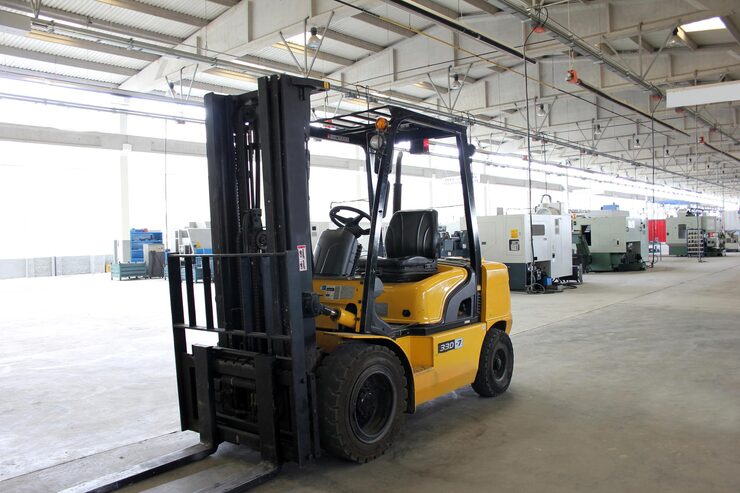
The rent a forklift, price can vary significantly depending on the type of machine and its lifting capacity. Smaller cushion-tire or electric warehouse forklifts tend to fall on the lower end of the rental spectrum, while heavy-duty or rough terrain models designed to lift higher weights command much higher rates.
|
Forklift Type |
Daily Rate ($) |
Weekly Rate ($) |
Monthly Rate ($) |
|
3,000–5,000 lb Cushioned (warehouse) |
299 |
699 |
750–1,100 |
|
5,000 lb Pneumatic |
349 |
799 |
1,000–2,000 |
|
6,000 lb Pneumatic |
399 |
899 |
1,000–2,000 |
|
8,000 lb Cushion Tire |
499 |
999 |
1,500–2,500 |
|
12,000 lb Cushion Tire |
599 |
1,399 |
1,500–10,000 |
|
15,000 lb Cushion Tire |
699 |
1,890 |
1,500–10,000 |
|
3,500 lb Stand‑Up (electric) |
300 |
740 |
1,831 |
|
4,000 lb Stand‑Up (electric) |
305 |
800 |
2,100 |
|
3,500 lb Reach Truck |
140 |
385 |
1,250 |
|
4,500 lb Reach Truck |
150 |
500 |
1,350 |
|
3,000 lb Order Picker |
130 |
380 |
1,220 |
|
4,500 lb Electric Pallet Jack |
129 |
406 |
962 |
|
2,500 lb Walkie Stacker |
190 |
487 |
1,268 |
|
Rough Terrain – 6,000 lb |
378 |
1,068 |
2,353 |
|
Rough Terrain – 8,000 lb |
433 |
1,209 |
2,621 |
|
Rough Terrain – 10,000 lb |
393 |
1,005 |
2,519 |
|
Telehandler (various heights) |
411–689 |
1,056–1,854 |
2,460–4,368 |
|
Heavy‑Duty Cushion (50,000–70,000 lb) |
1,500–2,900 |
N/A |
N/A |
|
Heavy‑Duty Pneumatic (30,000–100,000 lb) |
500–3,900+ |
N/A |
N/A |
|
Manual Pallet Jack |
45–230 |
N/A |
N/A |
Knowing the average forklift rental rates in advance gives businesses leverage when comparing quotes from different providers and ensures they’re paying for only what they need. This knowledge also helps identify when a quote is unusually high or low, preventing costly mistakes.
10 Factors That Affect Average Forklift Rental Rates
When businesses calculate costs, they often focus on the headline number. But in reality, several variables influence the average forklift rental rates you’ll see in the market. Understanding these factors helps you budget more accurately and compare quotes with confidence.
1. Forklift Type
Indoor cushion-tire or electric forklifts are generally suited for warehouses, while rough terrain or telehandler models are designed for outdoor jobs. Knowing which type matches your work environment helps you avoid paying for features you don’t need. Always match the forklift to the ground conditions of your site to maximize safety and efficiency.
2. Capacity and Weight
The more weight a forklift is built to handle, the higher the rental rate tends to be. Before committing, consider the heaviest loads you’ll need to move so you don’t overestimate and rent a machine larger than your project requires. Check your load requirements carefully and choose a capacity that covers your needs with a small safety margin.
3. Attachments and Features
Extra attachments such as side shifters, clamps, or extended masts add versatility but can increase rental costs. Similarly, advanced features like ergonomic cabins or smart tracking systems may raise rates. It’s important to evaluate whether these add-ons are essential or just nice-to-have for your project. Only request attachments that are directly relevant to your tasks to avoid paying for unused extras.
4. Seasonal Demand
Peak seasons in construction, warehousing, or shipping can drive up demand, and with it, rental rates. Planning ahead and booking early ensures availability and protects you from seasonal price increases. If your project timeline is flexible, try scheduling rentals during off-peak periods to secure better rates.
5. Support and Maintenance
The level of support included in your rental agreement affects overall value. Companies that provide strong maintenance programs and quick replacements minimize downtime, making them worth considering even if their rates aren’t the lowest. Always ask about maintenance response times so you know how quickly issues will be resolved.
6. Safety and Compliance
Some providers include mandatory training or safety programs in their agreements. While this can increase equipment rental pricing, it ensures operators meet safety standards and reduces risks on the job site. Confirm if the company offers certified operator training, which can save you the effort of arranging it separately.
7. Contract Flexibility
The structure of your agreement also matters. Flexible contracts that allow extensions or adjustments without heavy penalties can save money and stress if your project timeline changes unexpectedly. Look for providers that allow no-cost or low-cost extensions so you have room for unexpected delays.
8. Market Competition
The number of forklift rental companies in your area influences rates. In competitive markets, companies are more likely to offer deals or add value to secure your business, while in less competitive areas, you may see less flexibility. Always request quotes from at least three providers to make sure you’re getting the best deal available.
9. Delivery and Pickup Services
Transporting forklifts to and from your job site is often a hidden factor in overall rental expenses. Providers that handle delivery and pickup can save you time and logistics headaches. This service is especially valuable if your project site is remote or difficult to access. Always confirm delivery fees in advance so you can include them in your budget.
10. Insurance and Liability
Many forklift rental companies require proof of insurance or offer their own coverage options. Factoring this into your agreement helps you avoid unexpected costs if an accident occurs. With forklifts and industrial trucks linked to an average of 34,900 injuries each year, the importance of proper coverage cannot be overstated. Check whether your business insurance already covers rentals before purchasing additional coverage.
How to Choose the Best Forklift Rental Companies
Selecting the right provider is just as important as knowing how much to rent a forklift. Even if two businesses advertise similar equipment, the service quality, hidden costs, and overall experience can differ greatly. The best forklift rental companies provide support, transparency, and flexibility that help you get the job done without surprises.
Below are the key factors to consider when making your choice:
1. Reputation and Experience in the Market
Knowing how much to rent a forklift for a day is important, but choosing a provider with a strong reputation ensures you’re not sacrificing quality for cost.
- Proven Track Record: A company with years of experience shows it can consistently meet client needs. Longevity also suggests they’ve handled many types of projects successfully.
- Customer Reviews: Strong reviews highlight a provider’s reliability and customer service. Checking testimonials gives you real insight into how they treat clients.
- Industry Knowledge: Companies familiar with your industry can recommend the right equipment. Their expertise helps ensure you’re not overspending on unnecessary features.
2. Transparency in Pricing
Clear pricing matters as much as knowing the average forklift rental rates, because unexpected fees can quickly inflate your budget.
- Detailed Quotes: Reputable providers clearly outline the rent a forklift price in daily, weekly, and monthly terms. This makes it easier to compare one company to another.
- Hidden Fees: Delivery, pickup, or fuel charges can increase the final bill. Always ask for these costs upfront to avoid unexpected expenses.
- Insurance Requirements: Many rentals require insurance coverage. Confirm whether it’s already included in the rate or billed separately.
3. Range of Equipment Options
A broad selection also gives you a clearer view of equipment rental pricing across models, helping you make a more informed decision.
- Variety of Forklift Types: A wide selection of forklifts means you can match the machine to the job. Having options prevents you from paying for equipment that’s oversized or undersized.
- Capacity Choices: Different weight capacities let you choose a forklift that fits your load requirements. This way, you don’t pay extra for lifting power you don’t need.
- Updated Fleet: Modern, well-maintained forklifts are safer and more efficient. Renting newer models reduces the risk of breakdowns that could disrupt your project.
4. Flexibility in Rental Terms
Understanding how much to rent a forklift on different terms allows you to match cost with your project’s timeline.
- Short-Term Rentals: Daily and weekly rentals are great for short projects. They give you the freedom to rent equipment only for the exact time you need it.
- Long-Term Rentals: Monthly agreements often provide the best overall value. They allow you to keep equipment on site without constantly renewing contracts.
- Extension Options: Projects can change, and flexible providers allow extensions without heavy penalties. This helps you avoid downtime and added stress.
5. Customer Support and Maintenance
When evaluating providers, think beyond rent a forklift price and consider the long-term value of responsive support.
- On-Site Service: Some forklift rental companies send technicians directly to your job site. Quick service means less downtime if something goes wrong.
- 24/7 Assistance: Around-the-clock support ensures help is always available. This is especially important if your project operates outside regular business hours.
- Preventative Maintenance: Well-maintained machines reduce the risk of costly issues. A provider that invests in upkeep delivers safer, more dependable equipment.
6. Geographic Reach and Delivery Services
Your ability to get a forklift quickly can influence the total equipment rental pricing, especially if delays cause project overruns.
- Local vs. National Providers: Local providers may offer more personalized service, while national companies usually have bigger fleets. The right choice depends on whether you value personal attention or large-scale availability.
- Delivery Fees: Transporting forklifts isn’t free, and charges vary by distance. Always confirm delivery and pickup fees before committing to a rental.
- Availability: Providers with multiple branches often deliver faster and replace equipment sooner if needed. Quick access reduces downtime on your job.
Frequently Asked Questions
Should I buy or rent a forklift?
The decision to buy or rent depends on how often you plan to use the equipment. Renting is typically the smarter choice for businesses with temporary, seasonal, or short-term needs because it avoids the upfront investment and ongoing maintenance costs. Buying makes sense if a forklift will be in daily use for years, as ownership eventually becomes more cost-effective than repeated rentals.
Why rent a forklift?
Renting a forklift offers flexibility and convenience, especially for companies that don’t need equipment year-round. It allows you to scale up during busy seasons, take on short-term projects, or test out equipment before making a purchase. Renting also means maintenance and servicing are handled by the provider, saving you time and operational costs.
Do forklifts require insurance?
Yes, forklifts generally require insurance when rented from a provider. Insurance protects your business from liability in the event of accidents, equipment damage, or injuries that occur during use. Some rental companies offer their own coverage, while others may accept proof of insurance from your existing business policy.
Is 5000 hours a lot for a forklift?
Yes, 5,000 hours is considered a significant amount of usage for a forklift. While many machines can last much longer with proper care, reaching this point usually means the forklift has experienced heavy wear and may need more frequent maintenance. Businesses should carefully inspect or service forklifts with this level of use to ensure reliability and safety.
What is the lifespan of a forklift?
The average lifespan of a forklift is about 10,000 to 12,000 operating hours, which often translates to around 7 to 10 years depending on usage and maintenance. A well-maintained forklift can exceed this range, while one used heavily in demanding environments may wear out faster. Regular service and proper handling are key to maximizing its working life.
Why Wait? Get a Forklift in Lauderdale Lakes Today
Taking the time to compare options and plan ahead ensures you get the right forklift at the right value for your project. At Almeida Forklifts, we make this process simple and stress-free. Based in Lauderdale Lakes, FL, we specialize in both short-term and long-term forklift rentals tailored to your needs. Whether you need equipment for a single project, a busy seasonal period, or a trial run before purchasing, our dependable fleet and flexible rental terms are designed to keep your operations running smoothly.
Ready to optimize your operations? Trust Almeida Forklifts for reliable, efficient, and hassle-free rentals.