
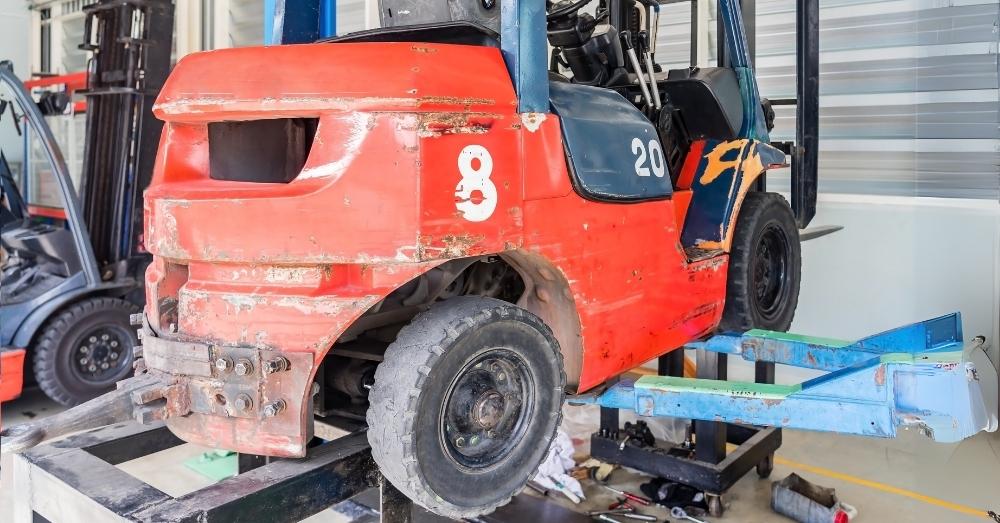
Forklifts are essential in warehouses, plants, and distribution centers, ensuring operations run efficiently and deadlines are met. But like any machine, they wear down—and when issues are ignored, minor problems can quickly turn into costly breakdowns or accidents.
The question many facility managers and operators ask is: How soon should forklift repairs be made?
The short answer is immediately, but the reality is more nuanced. Knowing the answer can save money, extend equipment lifespan, and most importantly, protect worker safety.
Table of Contents
Key Takeaways
✔ Recognizing red flags like spongy brakes, fluid leaks, stiff steering, warning lights, strange noises, or damaged tires can prevent serious accidents before they happen.
✔ Knowing when to repair a forklift—whether immediately, within 48 hours, or at the next service interval—helps prevent small problems from becoming costly failures.
✔ Preventive timelines built on a forklift maintenance schedule reduce breakdowns and costs, while reactive timelines lead to higher risks and disruptions.
✔ Planned vs emergency forklift maintenance isn’t an either-or choice, but prevention always costs less and provides greater safety than last-minute fixes.
✔ A structured forklift maintenance schedule with daily, weekly, monthly, and annual inspections keeps equipment reliable and compliant with safety standards.
✔ The red tag process ensures unsafe forklifts are immediately removed from service, repaired by certified technicians, and only returned once proven safe.
When Is a Forklift Considered Unsafe to Operate?
No forklift should ever be used if it endangers operators or nearby workers. OSHA regulations are clear: any forklift that is not in a safe working condition must be removed from service immediately and tagged out until repairs are complete.
Common Warning Signs of Unsafe Equipment
Knowing the signs of a failing forklift helps prevent accidents before they occur. Here are the most common red flags:
Faulty Brakes
- Difficulty stopping, even under light loads.
- Longer stopping distances than normal.
- Brakes that feel spongy or unresponsive.
Hydraulic Leaks
- Visible puddles or drips of hydraulic fluid under the forklift.
- Slow or jerky lifting motion.
- Noticeable drop in lifting power.
Steering Problems
- Stiff, delayed, or erratic steering response.
- Vehicle pulling to one side while moving.
- Increased difficulty maneuvering in tight spaces.
Warning Lights
- Illuminated indicators for oil pressure, battery charge, or engine performance.
- Ignoring these lights can lead to major component failure.
Unusual Noises
- Grinding, squealing, or knocking during operation.
- Sudden new sounds that weren’t present before.
- Noises that change with speed or lifting activity.
Tire Damage
- Severe wear that reduces traction.
- Visible cracks, bulges, or punctures.
- Tires that compromise stability or increase the risk of tip-over.
Understanding the Forklift Repairs Timeline
Every facility needs a clear system for handling forklift issues, whether they involve small adjustments or urgent mechanical failures. A well-defined process prevents confusion, reduces downtime, and ensures compliance with safety regulations. Establishing a proper forklift repairs timeline helps companies balance efficiency with safety.
Urgency Levels in Forklift Repairs
Repairs should always be prioritized based on the severity of the issue. Knowing when to repair a forklift can mean the difference between a quick fix and a major accident.
Immediate Repairs
- Any problem that impacts safety requires action without delay.
- Issues such as brake failure, steering malfunctions, or hydraulic leaks demand instant attention.
- If you’re asking, how soon should forklift repairs be made in these situations, the answer is immediately.
Repairs Within 24–48 Hours
- Problems that may not pose an immediate safety risk but could worsen quickly.
- Examples include small oil leaks, minor electrical issues, or warning lights that signal early trouble.
- Acting within this window prevents escalation and protects productivity.
Scheduled Repairs
- Non-critical issues that can wait until the next service interval.
- Common examples are replacing worn lights, adjusting seat belts, or tightening loose fittings.
- These repairs can be built into the existing forklift maintenance schedule without major disruption.
A strong forklift repairs timeline balances urgency and efficiency. For example, replacing a burned-out headlight can wait until the next scheduled visit, but a faulty brake line requires the forklift to be shut down instantly.
Preventive vs Reactive Timelines
Another way to view the forklift repairs timeline is by distinguishing between proactive and reactive approaches.
Preventive Timelines
- Planned inspections and servicing at regular intervals.
- Reduces the likelihood of sudden breakdowns.
- Keeps the business in control of repair budgets and scheduling.
- Closely tied to a well-designed forklift maintenance schedule, which outlines daily, weekly, and monthly checks.
Reactive Timelines
- Repairs that only happen after a breakdown.
- More disruptive and costly due to unexpected downtime.
- Often linked to situations where managers waited too long to decide when to repair a forklift.
Facilities that rely only on reactive timelines often experience higher costs and safety risks. Those that invest in preventive care, however, avoid emergencies and maximize equipment lifespan.
Planned vs Emergency Forklift Maintenance: Which to Prioritize?
One of the most important decisions facility managers face is whether to invest in regular, proactive service or wait until problems arise. In practice, both strategies are necessary—but the balance between them determines safety, costs, and productivity. Understanding the difference between planned vs emergency forklift maintenance helps companies build smarter maintenance programs.
Planned Maintenance
Planned maintenance is the proactive, preventive approach to keeping forklifts in top condition. Instead of waiting for parts to fail, inspections and servicing are scheduled in advance, based on manufacturer recommendations and workplace usage patterns.
- Predictable Costs and Budgets: When maintenance is scheduled, costs become part of a stable budget instead of surprise expenses. For example, replacing worn brake pads during a scheduled inspection is significantly cheaper than repairing a full brake system after a sudden failure.
- Fewer Emergency Breakdowns: Routine inspections identify small problems—like leaking seals, worn tires, or weak batteries—before they escalate. Preventing just one major breakdown can save thousands in repair costs and lost productivity.
- Extended Equipment Lifespan: Forklifts that receive consistent care can operate for years longer than those that don’t. Lubrication, timely fluid changes, and part replacements all protect expensive components from premature wear.
- Higher Safety Compliance: Planned maintenance keeps forklifts aligned with OSHA requirements. Staying compliant not only avoids fines but also builds a culture of safety, which boosts worker confidence.
Emergency Maintenance
Emergency maintenance happens when a forklift suddenly breaks down or shows an immediate safety risk. Unlike planned servicing, emergency repairs often occur under pressure, where downtime directly impacts production and logistics.
Emergency maintenance is sometimes unavoidable—such as when a hidden defect suddenly surfaces—but it should never become the default strategy.
- Higher Labor and Parts Costs: Emergency service calls typically require rush orders for parts and overtime pay for technicians. For example, replacing a mast chain after it snaps during use is far more expensive than replacing it proactively during an inspection.
- Unplanned Downtime: A forklift out of service with no backup unit available can stall warehouse operations. Delays ripple through the supply chain, leading to missed shipments, frustrated clients, and lost revenue.
- Increased Risk of Accidents: Equipment that fails during operation puts operators and nearby workers in immediate danger. An emergency breakdown is often a symptom of missed early warning signs, which could have been addressed through planned care.
Striking the Right Balance
Comparing planned vs emergency forklift maintenance underscores a key principle: prevention is always less costly and safer than reaction.
✔ Companies that rely heavily on emergency repairs often overspend, lose valuable work hours, and expose their teams to higher risks.
✔ Businesses that invest in a comprehensive planned program see fewer breakdowns, better safety records, and lower total ownership costs.
✔ The most effective strategy blends both approaches: planned maintenance as the foundation, with the flexibility to respond quickly when unexpected failures occur.
Building a Forklift Maintenance Schedule
While repairs solve immediate problems, maintenance is what keeps those problems from occurring in the first place. A well-structured forklift maintenance schedule is divided into daily, weekly, monthly, and annual inspections, each with specific responsibilities.
Daily Maintenance Tasks
Operators are the first line of defense against unsafe equipment. Before each shift, drivers should perform basic checks that confirm the forklift is safe to use.
Operator Pre-Shift Checks
- Brakes: Ensure they respond quickly and smoothly.
- Tires: Look for wear, cracks, or low pressure.
- Fluid levels: Check engine oil, hydraulic fluid, and coolant.
- Warning lights: Address any illuminated indicators immediately.
Visual Inspection
- Walk around the forklift before operation.
- Look for leaks, loose parts, or visible damage.
- Report concerns so they can be scheduled for repair.
Weekly Maintenance Tasks
Some systems don’t need daily attention but benefit from weekly checks to stay reliable. Weekly tasks in a forklift maintenance schedule are simple but critical in preventing premature wear.
Battery Checks (for Electric Forklifts)
- Inspect battery fluid levels and top off with distilled water if required.
- Clean terminals to prevent corrosion.
- Test voltage to ensure full charging capacity.
Tire Checks
- Measure tread depth and confirm even wear.
- Verify correct inflation levels.
- Replace damaged or unsafe tires.
Lubrication
- Grease moving joints such as mast rollers and chains.
- Lubricate steering components for smooth handling.
Monthly Maintenance Tasks
Monthly inspections dig deeper into systems that experience heavier strain over time.
Hydraulic System
- Inspect hoses and seals for leaks.
- Test lifting and lowering speed.
- Replace worn seals before they fail.
Brake System
- Test brake pedal pressure and stopping distance.
- Inspect brake fluid levels.
- Replace worn pads or shoes.
Steering Alignment
- Check for responsiveness and accuracy.
- Adjust or repair if steering feels loose or delayed.
Filter Replacements
- Replace oil, air, and fuel filters as needed.
- Ensure engines and hydraulics operate without contamination.
Annual or Semi-Annual Maintenance Tasks
Annual inspections are the cornerstone of a forklift maintenance schedule. At least once or twice a year, forklifts should undergo a comprehensive service by a certified technician.
Full Inspection
- Detailed check of all systems including engine, transmission, hydraulics, and electronics.
- Compliance review to confirm OSHA standards are met.
Load Testing
- Verify that the forklift can lift its rated capacity safely.
- Identify weaknesses in the mast, forks, or hydraulics.
Engine Diagnostics (for Internal Combustion Forklifts)
- Scan for error codes.
- Test performance under various load conditions.
- Tune up to optimize efficiency.
Safety Red Tag Procedure
When a forklift shows signs of being unsafe, it must be taken out of service immediately. The Safety Red Tag Procedure is the formal process that ensures unsafe equipment is clearly identified, removed from circulation, and only returned once it is fully repaired.
Steps in the Safety Red Tag Procedure
- Identify the Issue: Operators should stop using the forklift as soon as a safety concern is noticed. Examples include brake problems, hydraulic leaks, or steering malfunctions. At this stage, managers must decide when to repair a forklift and ensure no one attempts to operate it until cleared.
- Apply the Red Tag: A visible red tag is attached to the forklift in a prominent location, such as the steering wheel or mast. The tag clearly states the equipment is “Out of Service.” This ensures that everyone understands how soon forklift repairs should be made—the answer is before the forklift can be used again.
- Remove from Operation: The forklift should be moved to a designated repair area away from active work zones. Removing unsafe equipment helps maintain a consistent forklift repairs timeline and prevents operators from making dangerous mistakes.
- Notify Maintenance or Service Teams: Once tagged, the issue is logged and forwarded to the maintenance department or an outside technician. This ensures the repair is scheduled promptly and aligned with the company’s forklift maintenance schedule.
- Inspect and Repair: A certified technician inspects the forklift, diagnoses the issue, and makes the necessary repair. Only qualified personnel should determine when to repair a forklift fully and safely.
- Verify Safety and Remove the Tag: After repairs are complete, the forklift must be tested to ensure it meets all operational and safety standards. Once verified, the red tag can be removed, and the forklift returned to service. This process helps organizations balance planned vs emergency forklift maintenance by keeping emergency fixes under control.
Why the Safety Red Tag Procedure Matters
The Safety Red Tag Procedure is a safeguard for workers, compliance, and overall operations. Considering that forklifts are linked to nearly 100 deaths each year, having a clear red tag process is a critical step in preventing accidents and saving lives.
Protects Operators and Workers
- Prevents the use of unsafe equipment: A red tag clearly indicates that a forklift is out of service. This prevents operators from accidentally driving a machine that could malfunction. For example, a forklift with faulty brakes could easily cause a collision in a busy warehouse aisle.
- Eliminates guesswork about safety: Workers no longer have to wonder when a forklift is considered unsafe to operate. The moment an issue is spotted, the red tag answers that question by marking the equipment as off-limits until it’s fixed.
Maintains Compliance
- Meets OSHA requirements: OSHA mandates that unsafe forklifts must be removed from service until repairs are made. The red tag system provides a straightforward way to comply with this rule, avoiding fines or citations.
- Supports accurate record-keeping: Every red tag incident is logged, creating a paper trail that aligns with the company’s forklift maintenance schedule. This documentation proves that management is proactive about safety and maintenance.
Prevents Costly Accidents
- Reduces risk of injury and damage: Without a red tag system, an unsafe forklift might slip back into operation, putting workers and products at risk. A single accident can result in medical bills, legal claims, or thousands of dollars in lost inventory.
- Adds structure to the repair process: The procedure ties directly into the forklift repairs timeline by ensuring no issue is overlooked. Instead of waiting until a breakdown occurs, problems are flagged, scheduled, and addressed promptly.
Supports Better Fleet Management
- Clarifies repair responsibilities: By tagging and logging issues, managers always know how soon forklift repairs should be made and who is handling them. This keeps accountability clear between operators, maintenance teams, and service providers.
- Balances proactive and reactive care: A proper red tag process helps businesses reduce reliance on emergency fixes. It becomes easier to balance planned vs emergency forklift maintenance, since many issues are caught early enough to schedule them before they become urgent.
Frequently Asked Questions (FAQs)
How often should forklifts be serviced?
Forklifts should typically be serviced every 250–300 hours of operation. This interval ensures that critical components like brakes, hydraulics, and engines are inspected before small issues become major problems. Sticking to this schedule also keeps the forklift aligned with OSHA safety requirements and reduces the risk of unexpected breakdowns.
What is the lifespan of a forklift?
The average lifespan of a forklift is about 10,000 hours of use. With proper care and a consistent maintenance schedule, some forklifts can exceed this benchmark, especially in lower-intensity environments. However, heavy use and poor upkeep can shorten the equipment’s life considerably.
When should a forklift be replaced?
Most manufacturers recommend replacing a forklift once it has around ten years of service. At this point, repairs often become more frequent and expensive, making replacement a better long-term investment. Companies should also consider replacement sooner if the forklift no longer meets safety standards or operational demands.
What is one of the most serious forklift defects?
Brake failure is considered one of the most dangerous forklift defects. A forklift with faulty brakes poses an immediate risk to operators, other workers, and inventory in the warehouse. Because stopping ability is crucial in preventing collisions, any brake-related issue requires immediate attention and repair.
What defects will take a forklift out of service?
A forklift will be taken out of service if it has leaks, cracks, or other visible defects that compromise safety. Common issues include damaged hydraulic hoses, worn mast chains, or significant fluid leaks that can lead to malfunctions. According to OSHA standards, these conditions require the forklift to be red-tagged and repaired before returning to operation.
Keep Your Forklifts Running Strong With Almeida Forklifts
At Almeida Forklifts in Lauderdale Lakes, FL, we specialize in keeping your fleet running smoothly through our Class 3 Preventative Maintenance service. We go beyond quick fixes, identifying and addressing potential issues before they become costly problems. By following OSHA’s strict standards, we recommend preventative maintenance every 200 hours or quarterly, helping you catch wear and malfunctions early. Our goal is simple: to maximize your forklift’s lifespan, reduce downtime, and save you money on future repairs.