
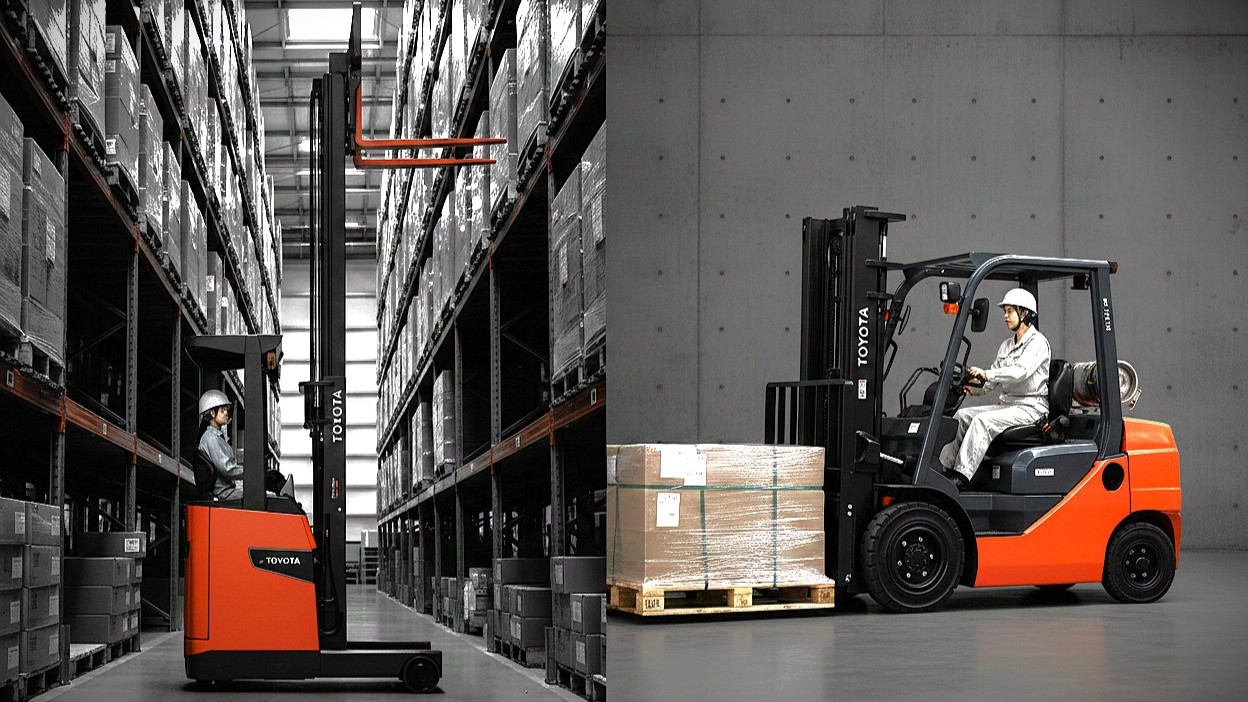
Warehouses today are under pressure to store more inventory in less space while moving it faster and safer. That is where the debate around reach truck vs forklift becomes critical. While both machines move pallets, they are built for very different environments and jobs.
Key Takeaways
✔ Reach trucks are designed for narrow aisles and vertical storage, while forklifts are built for heavier loads and broader versatility.
✔ Warehouse layout and aisle width often determine whether a reach truck or forklift performs more efficiently.
✔ Reach trucks prioritize lift height and precision, whereas forklifts excel at handling heavier loads at lower elevations.
✔ Power options differ significantly, with reach trucks operating electrically indoors and forklifts offering both indoor and outdoor flexibility.
✔ Choosing the right equipment depends on balancing storage strategy, load requirements, and daily operational needs.
Table of Contents
What Is a Reach Truck?
To understand the difference, it helps to answer a common question first: what is a reach truck? A reach truck is a specialized type of narrow-aisle lift designed for indoor warehouse environments where vertical storage and tight spacing matter most.
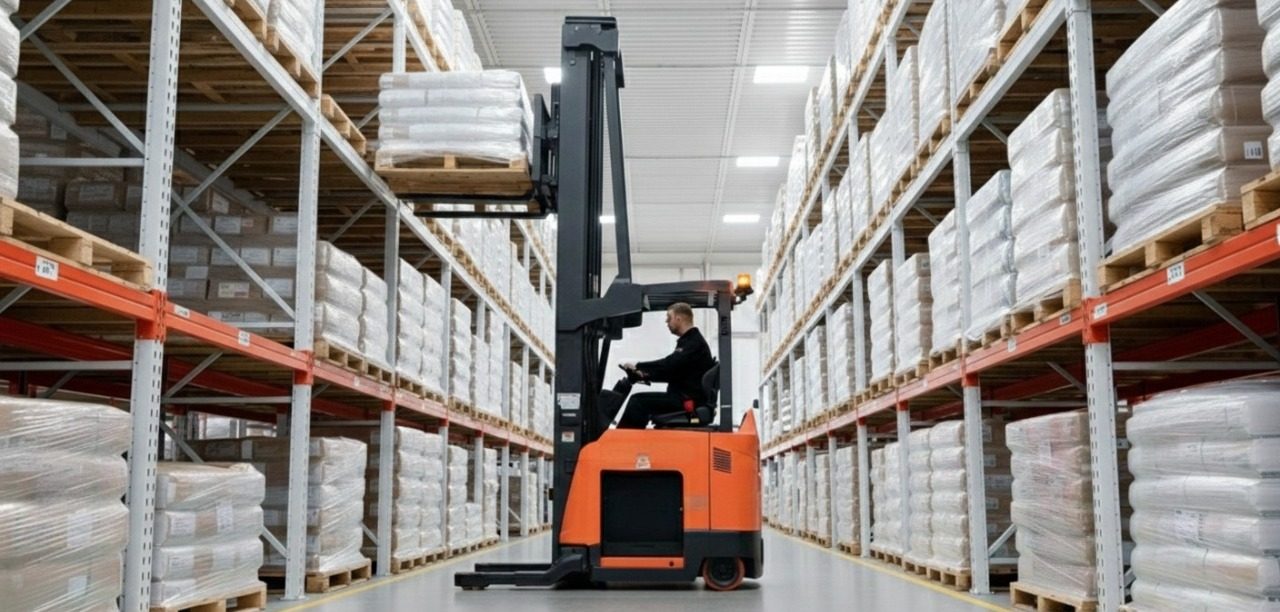
Unlike traditional forklifts, reach trucks are engineered to move forward into racking systems and lift pallets to impressive heights while operating in very narrow aisles.
In high-density distribution centers, a reach truck allows facilities to store more pallets upward instead of expanding outward. This design makes it a core tool for modern warehousing and fulfillment operations.
What Is a Forklift (Counterbalance)?
A counterbalance forklift is the most recognizable lift truck in material handling. It is the general-purpose workhorse used across warehouses, manufacturing plants, construction sites, and loading docks.
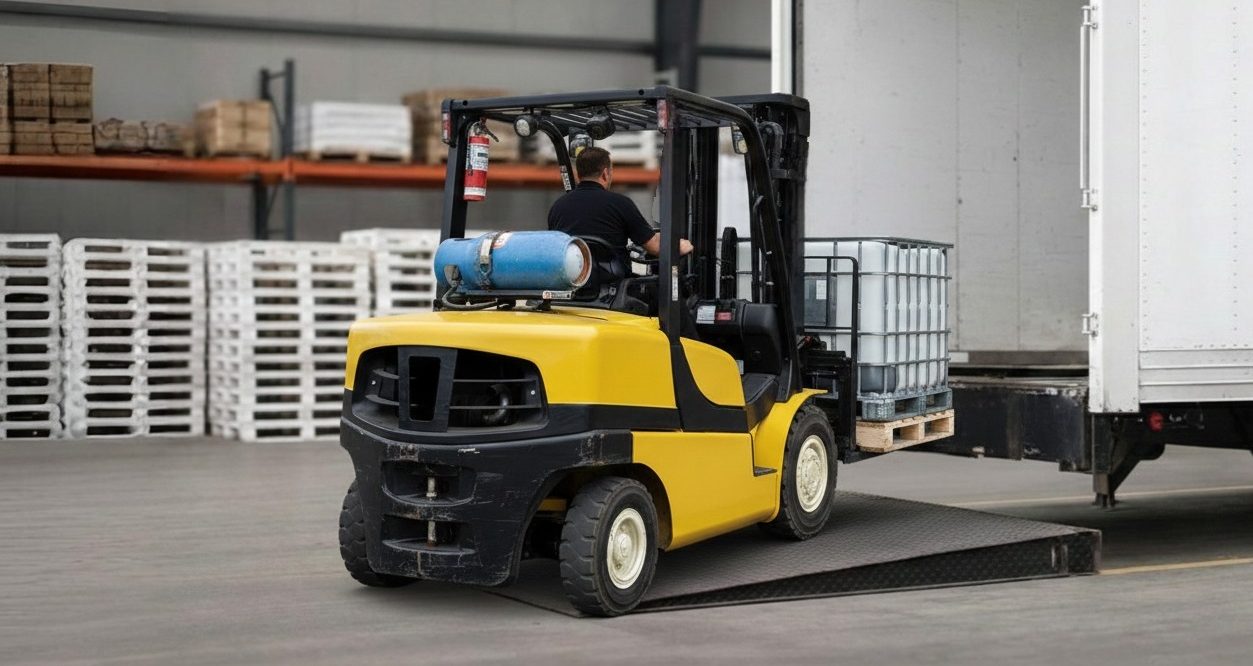
A forklift balances its load using a heavy counterweight at the rear of the machine. This simple design makes it versatile and durable, but it also limits how narrow the aisles can be and how high loads can safely be lifted compared to a high reach forklift.
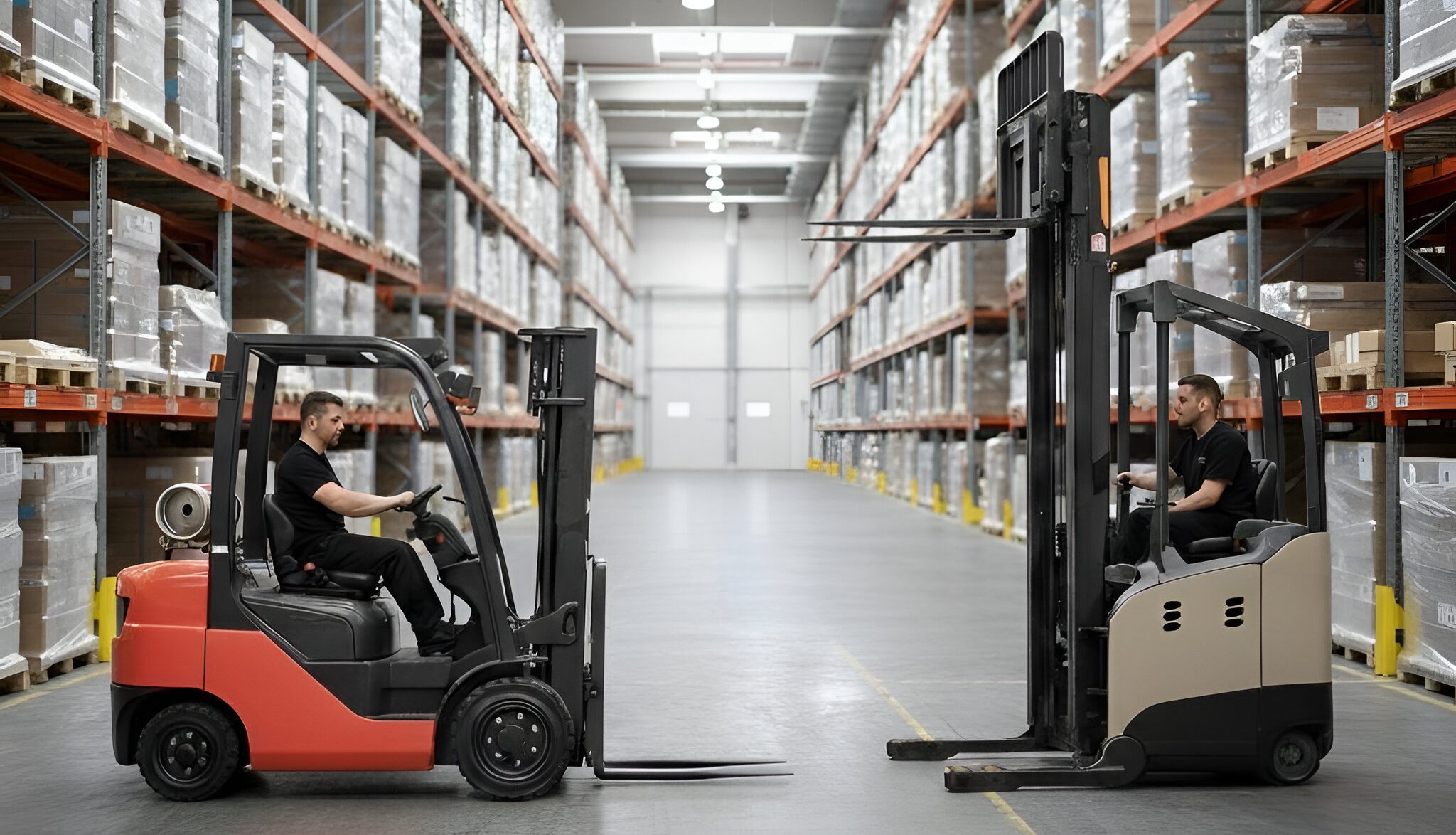
Reach Truck vs Forklift: Key Differences at a Glance
✔ Maneuverability and Warehouse Layout Considerations
Layout often determines the best choice in the reach truck vs forklift comparison.
Forklifts
Counterbalance forklifts are highly versatile and increasingly preferred for both indoor and outdoor work. They still need more room to turn and align loads, so they perform best in open layouts, docks, and mixed-use areas. They move pallets efficiently in wider travel lanes and work well in staging zones where loads are frequently shifted or loaded onto trucks.
Reach Trucks
Reach trucks shine in narrow aisles because the mast reaches forward into racking, improving storage density. They are designed to work efficiently in high-density racking where tight turning space is a constant challenge. Designing around a reach forklift can add pallet positions without expanding the building, especially in warehouses focused on maximizing vertical storage.
✔ Load Capacity and Performance Differences
Capacity depends on whether the job demands heavier loads or higher lifts..
Forklifts
Forklifts typically handle heavier loads at lower heights, making them better for bulky, irregular, or very heavy pallets that do not need extreme lift. They are a strong choice for floor-level movement, loading docks, and handling materials that vary in size or weight. Their counterweight design supports stable lifting for general-purpose work across many industries.
Reach Trucks
A high reach forklift like a reach truck prioritizes lift height, and capacity decreases as lift height increases. They are ideal for repeated pallet placement at upper rack levels where accuracy and control matter. Reach truck forklift works best for consistent pallet weights stored high in racking, especially in operations where vertical storage is a main strategy.
✔ Power Source and Environmental Suitability
Power choices affect where each truck can realistically operate.
Forklifts
Forklifts come in electric, gas, diesel, and LPG options, making them practical indoors or outdoors. Fuel-powered models handle weather, uneven pavement, and dock transitions better than most narrow-aisle equipment. A used forklift with propane or diesel power is often cost-effective for yards and loading docks, and many mixed-environment sites choose forklifts over a dedicated reach truck forklift for all-around flexibility.
Reach Trucks
All reach trucks are electric, which supports indoor air quality and quieter operation, plus precise control when placing loads at height. Electric power also helps with smooth acceleration and braking, which is valuable when working close to racking. Because they are built primarily for indoor floors, reach trucks perform best in controlled warehouse environments.
✔ Operator Experience and Visibility
Operator position changes comfort, visibility, and precision.
Forklifts
Forklift operators sit forward and often reverse with loads, which can increase fatigue during long shifts in busy areas. They are generally straightforward to operate for common tasks, but visibility can change depending on load size and the amount of reversing required. In high-traffic areas, awareness of pedestrians and other equipment becomes a constant priority.
Reach Trucks
A reach truck operator sits sideways, improving visibility down aisles and reducing neck strain. This position supports better alignment when traveling through narrow lanes and placing pallets into racking. Training matters for both, but a reach forklift typically requires more precision at height, especially close to racking where small alignment errors can lead to product or rack damage.
|
Category |
Reach Truck (Reach Forklift / High Reach Forklift) |
|
Best for |
High-density storage, narrow aisles, indoor racking, order picking |
|
Ideal environment |
Indoor warehouses |
|
Aisle width needs |
Very tight aisles (often around 8 ft) |
|
Lift strength vs lift height |
Prioritizes height; capacity drops more at higher lifts |
|
How it stays stable |
Stabilizing legs + extending mast (reaches into racking) |
|
Key design feature |
Mast extends forward (pantograph) to reach pallets |
|
Maneuverability |
Excellent in tight spaces |
|
Power |
Electric only |
|
Operator position |
Sideways seating for aisle visibility |
|
Typical use cases |
Tall racking, narrow-aisle warehouses, maximizing vertical space |
What Forklift Class Does a Reach Truck Fall Under?
According to OSHA classifications, reach trucks fall under Class II Electric Motor Narrow Aisle Trucks.
This classification includes reach trucks, order pickers, and turret trucks designed for narrow aisle operation.
Class II equipment requires specialized training due to its unique handling characteristics and operating environment.
Understanding this classification matters for compliance, insurance, and operator certification. Facilities cannot treat a reach truck the same as a standard forklift from a training or regulatory standpoint.
Is a Stand-Up Forklift the Same as a Reach Truck?
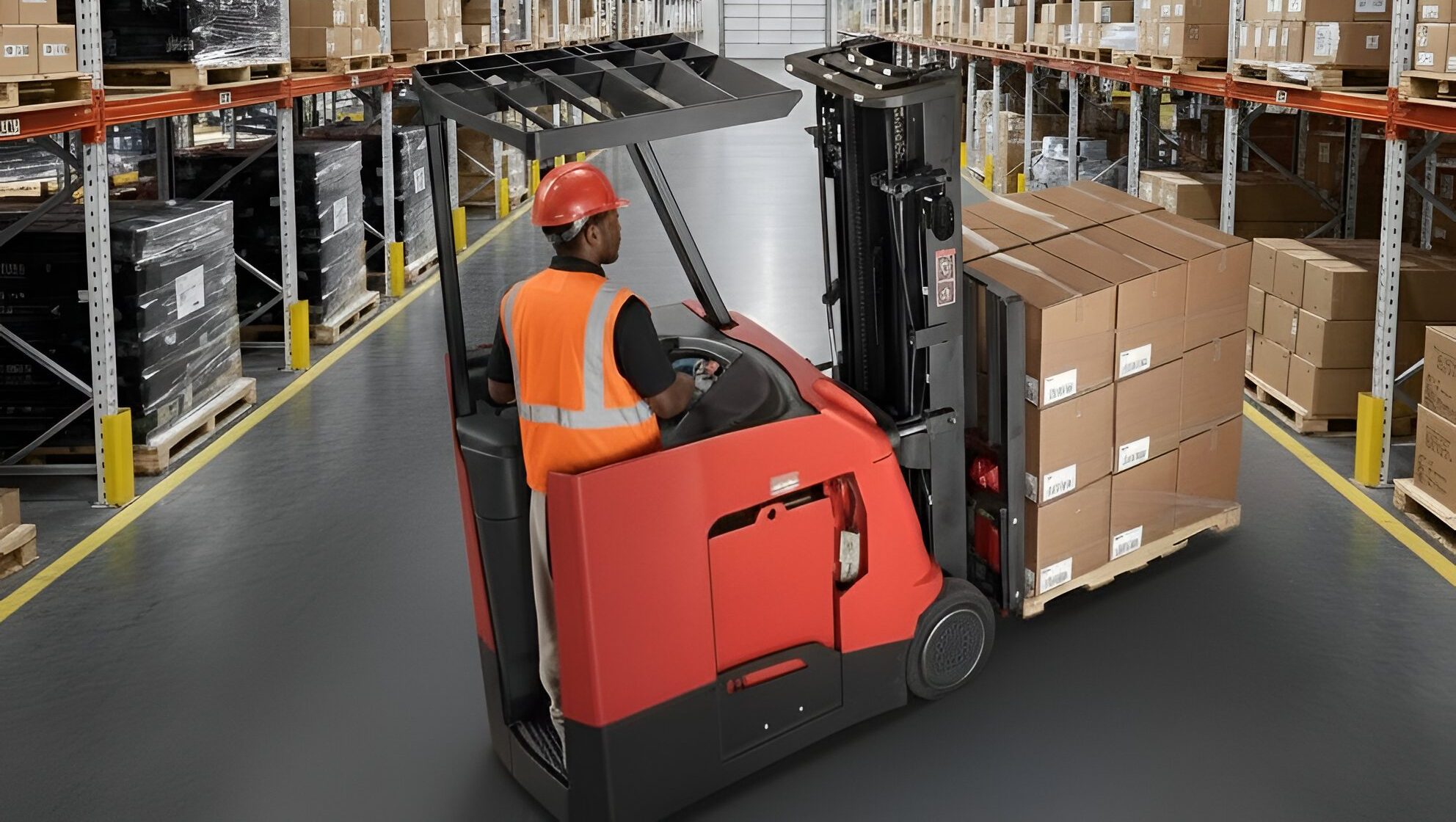
This is a common misconception. Not all stand-up forklifts are reach trucks. While many reach forklifts are stand-up or side-seated, a stand-up counterbalance forklift operates differently.
A stand-up forklift still relies on a counterweight and does not have an extending mast. A reach truck forklift uses stabilizing legs and forward-reaching forks to access deep racking.
The difference becomes obvious in narrow aisles. A stand-up forklift still needs more space than a high reach forklift designed specifically for tight warehouse layouts.
Is Operating a Reach Truck Difficult?
Operating a reach truck is not inherently difficult, but it does require more precision and training than a standard forklift.
Because reach trucks lift loads to extreme heights, operators must understand load stability, mast sway, and rack alignment. Small errors can become bigger risks at elevation.
Most operators find that once trained, reach forklifts feel intuitive and controlled. The sideways seating position and clear sightlines often improve confidence in narrow aisles.
Facilities that invest in proper training see fewer accidents and higher productivity when using reach forklifts.
How to Choose Between a Reach Truck and a Forklift
Choosing between a reach forklift and a forklift comes down to three core factors: layout, load, and operation.
- Facility Layout: Narrow aisles and tall racking point toward a reach truck. Mixed indoor and outdoor areas favor a forklift.
- Load and Task: High-level pallet placement favors reach trucks. Heavy, bulky, or outdoor tasks favor forklifts.
- Operation: Space optimization and vertical storage benefit from a high reach forklift. Versatility and general material handling benefit from a forklift, including a well-maintained used forklift.
Many large operations use both machines, assigning each to the tasks it performs best. Understanding the real-world differences between reach truck vs forklift ensures equipment decisions support growth, safety, and efficiency rather than limiting them.
Frequently Asked Questions (FAQs)
Can a reach truck replace a standard forklift in a warehouse?
A reach truck can replace a forklift only in very specific environments. It works best in indoor warehouses with narrow aisles and tall racking. If the operation includes outdoor work, dock loading, or uneven surfaces, a forklift is still necessary. Most facilities that switch entirely to reach trucks already have layouts designed for narrow-aisle systems.
Do reach trucks require different maintenance than forklifts?
Reach trucks generally have lower engine-related maintenance because they are electric only. However, their mast, reach mechanisms, and stabilizing legs require regular inspection. Used forklifts may need more frequent servicing due to fuel systems and heavier drivetrain components. Both machines need consistent preventive maintenance to remain safe and reliable.
Are reach trucks slower than forklifts?
Reach trucks are not necessarily slower, but they are optimized for precision rather than speed. In narrow aisles and high-rack environments, they often outperform forklifts in efficiency. Forklifts may move faster over longer distances in open spaces. Productivity depends more on layout than on raw travel speed.
Can reach trucks operate on uneven floors?
Reach trucks perform best on smooth, level warehouse floors. Uneven surfaces can affect stability, especially when lifting loads to height. Forklifts are better suited for rough floors, docks, and outdoor pavement. Floor condition is an important factor when selecting equipment.
Are reach trucks safer than forklifts?
Neither machine is inherently safer, but each has risks tied to its environment. Reach trucks require careful operation at height and close to racking. Forklifts face more hazards in mixed traffic areas and outdoor conditions. Proper training and layout design have a greater impact on safety than truck type alone.
Choose the Right Lift Truck for Warehouse Efficiency!
Almeida Forklifts helps operations in Lauderdale Lakes, FL select the best fit between reach trucks and forklifts based on layout, load demands, and daily workflow. With local support in Lauderdale Lakes, FL and equipment options suited for both narrow aisles and general handling, Almeida Forklifts supports smarter decisions for facilities across Lauderdale Lakes, FL.
Contact Almeida Forklifts today to request a quote or equipment recommendation.