
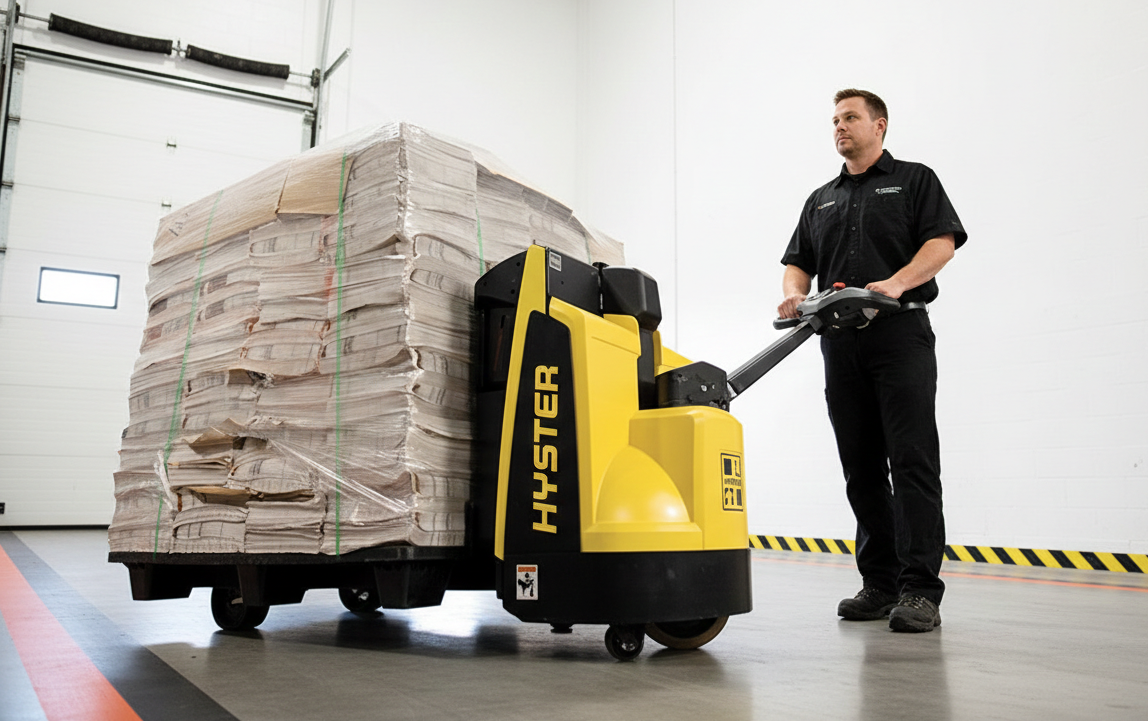
If your team relies on moving pallets quickly and safely, understanding Class 3 forklifts is essential. However, they’re often overlooked when businesses start searching for a forklift for sale.
Here’s the good news: learning how Class 3 forklifts work can save you time, prevent costly mistakes, and help you choose equipment that pays for itself in productivity.
Let’s break down what Class 3 forklifts do, why they’re so essential, and how to choose the right one for your business.
Table of Contents
Key Takeaways
✔ Class 3 forklifts are ideal for fast, short-distance pallet movement in tight warehouse spaces.
✔ Class 3 forklifts offer low operating costs and easy maintenance compared to larger forklift types.
✔ Class 3 and class 4 forklifts serve different roles, and many businesses benefit from using both.
✔ Choosing the right forklift requires evaluating capacity, battery life, safety features, and durability.
✔ Working with a trusted dealer like Almeida Forklifts ensures quality equipment and expert guidance.
What Is a Class 3 Forklift?
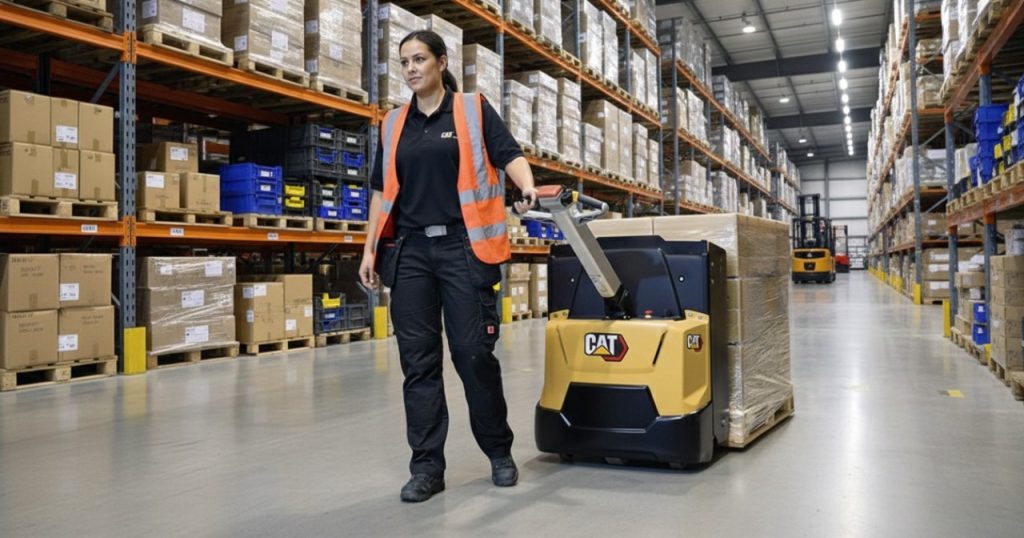
A class 3 forklift (often called a pallet jack, walkie truck, or pallet forklift) is a hand-controlled, highly maneuverable machine built for quick, short-distance pallet movement. Unlike larger forklift types that require a seated operator, Class 3 models excel in tight aisles, busy work areas, and fast-paced environments.
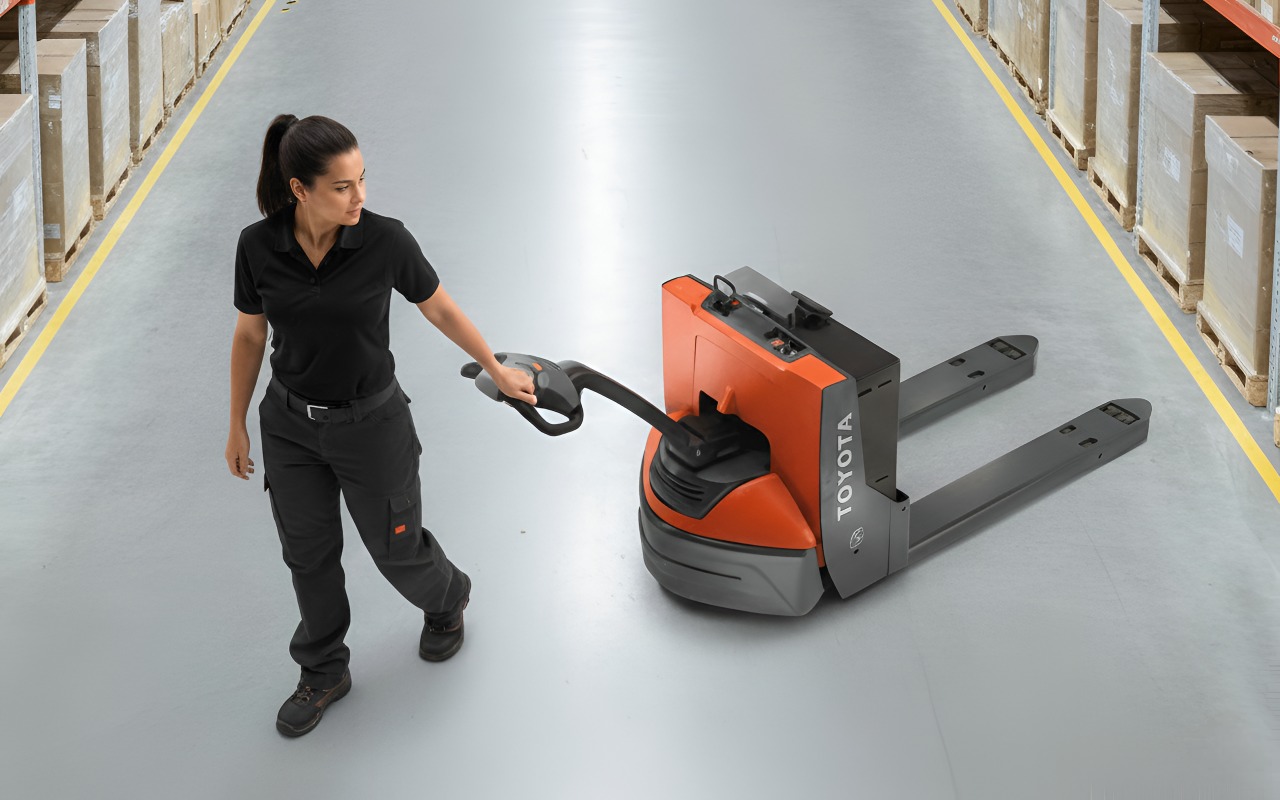
Why Class 3 Forklifts Are Essential in Modern Material Handling
Businesses often underestimate how much time and labor are wasted manually dragging pallets or using the wrong equipment.
A class 3 forklift solves that problem by offering:
- Fast pallet movement for high-volume operations
- Improved safety, reducing strain and injury risk for workers
- A low-cost alternative to larger forklift types
- Immediate usability, thanks to minimal operator training
- Compatibility with tight aisles, narrow storage rows, and crowded docks
Best Applications for Class 3 Forklifts
Class 3 models shine in environments where pallets move frequently and efficiency matters:
- Retail & Grocery: Replenishing shelves quickly
- Warehouses: Moving product across short to moderate distances
- Distribution Centers: Dock-to-rack transport
- Cold Storage: Electric motors perform well in chilled environments
- South Florida Businesses: Compact storage layouts and high-volume movement make class 3 forklifts especially valuable in the Lauderdale Lakes, FL, region
Core Features of a Class 3 Forklift
✔ Walk-Behind or Stand-On Functionality
Operators can walk behind or ride on a small platform, depending on the model. This boosts speed without compromising control.
✔ Compact Design for Tight Spaces
Class 3 forklifts are engineered for maneuverability, allowing them to glide through narrow aisles where larger machines like a class 4 forklift cannot operate efficiently.
✔ Electric or Manual Power Options
- Manual pallet jacks offer an economical option for short distances and light workflow.
- Electric walkies provide greater speed, reduced operator fatigue, and improved productivity for busy facilities.
✔ Low Maintenance Requirements
Electric motors and simpler moving parts mean reduced servicing costs—ideal for businesses that want reliable equipment without high overhead.
✔ Excellent Visibility and Control
Since the operator walks directly behind or stands beside the unit, visibility is superior compared to bulkier forklift types. This supports safer navigation in crowded workspaces.
Class 3 Forklift vs. Other Forklift Types
Forklifts are grouped into classes, each engineered for a specific environment and workload. Understanding these 7 types of forklifts helps you choose equipment that supports your workflow.
Overview of major forklift classes:
- Class 1: Electric rider forklifts for indoor warehousing
- Class 2: Narrow-aisle forklifts for high-density storage
- Class 3: Electric or manual pallet forklifts (walkies, walkie riders)
- Class 4: Cushion-tire forklifts for indoor, smooth surfaces
- Class 5: Pneumatic-tire forklifts for heavier loads indoors and outdoors
- Class 6: Electric/IC tractors for towing applications
- Class 7: Rough-terrain forklifts for outdoor construction
Forklift Types Compared: Class 3 vs. Class 4 Forklifts
While both Class 3 and Class 4 machines support indoor operations, they serve very different roles. A class 3 forklift focuses on pallet-level, short-distance movement, while a class 4 forklift handles heavier loads and longer travel paths.
Key Differences Between a Class 3 Forklift and a Class 4 Forklift
| Feature | Class 3 Forklift | Class 4 Forklift |
| Operation | Walk-behind or stand-on | Seated rider |
| Best For | Tight aisles, quick pallet shifts | Smooth floors, long travel, heavier loads |
| Power Source | Manual or electric | Typically internal combustion or electric |
| Maneuverability | Excellent in small spaces | Moderate; requires wider aisles |
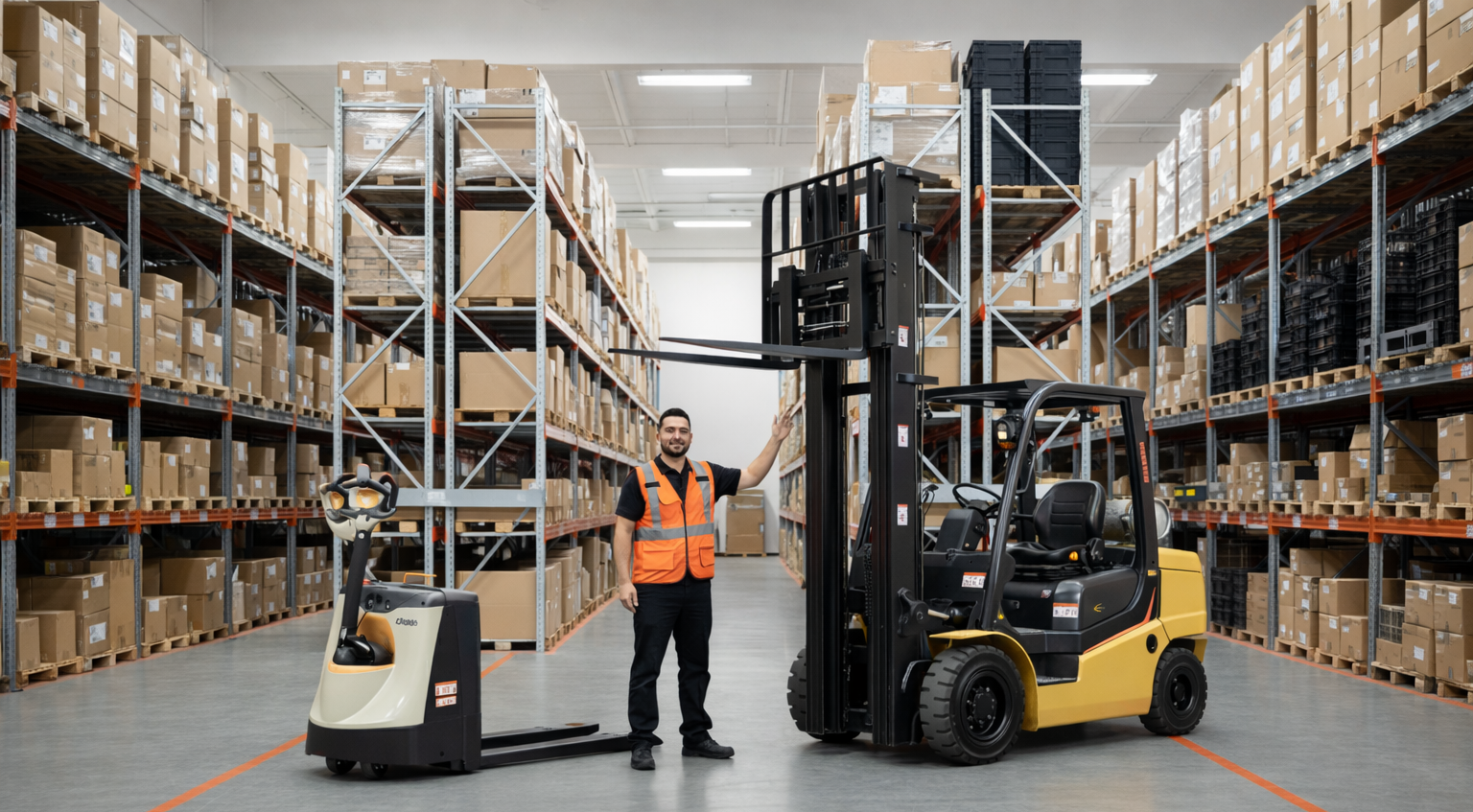
When to Use Each Forklift Type
A business may benefit from both forklift types depending on its layout and tasks:
Choose a Class 3 forklift when:
- You have tight aisles or limited space
- You need fast, repetitive pallet movement
- You’re loading/unloading trucks frequently
- You need a lower-cost, low-maintenance option
Choose a Class 4 forklift when:
- You handle heavier loads
- You need longer travel distance capabilities
- You operate on smooth indoor surfaces
- You want a traditional seated forklift experience
Where Pallet Forklift Equipment Fits in the Classification System
A pallet forklift or pallet jack is the most common form of Class 3 equipment. They are essential in warehouses where pallets are constantly entering and exiting trucks or moving between aisles.
Manual pallet forklifts are economical and require virtually no maintenance, while powered versions boost speed and reduce strain on workers.
4 Key Advantages of Class 3 Forklifts for Modern Warehouses
Modern warehouses depend on equipment that moves quickly, fits anywhere, and keeps labor costs down. That’s exactly why the class 3 forklift has become a staple for American businesses.
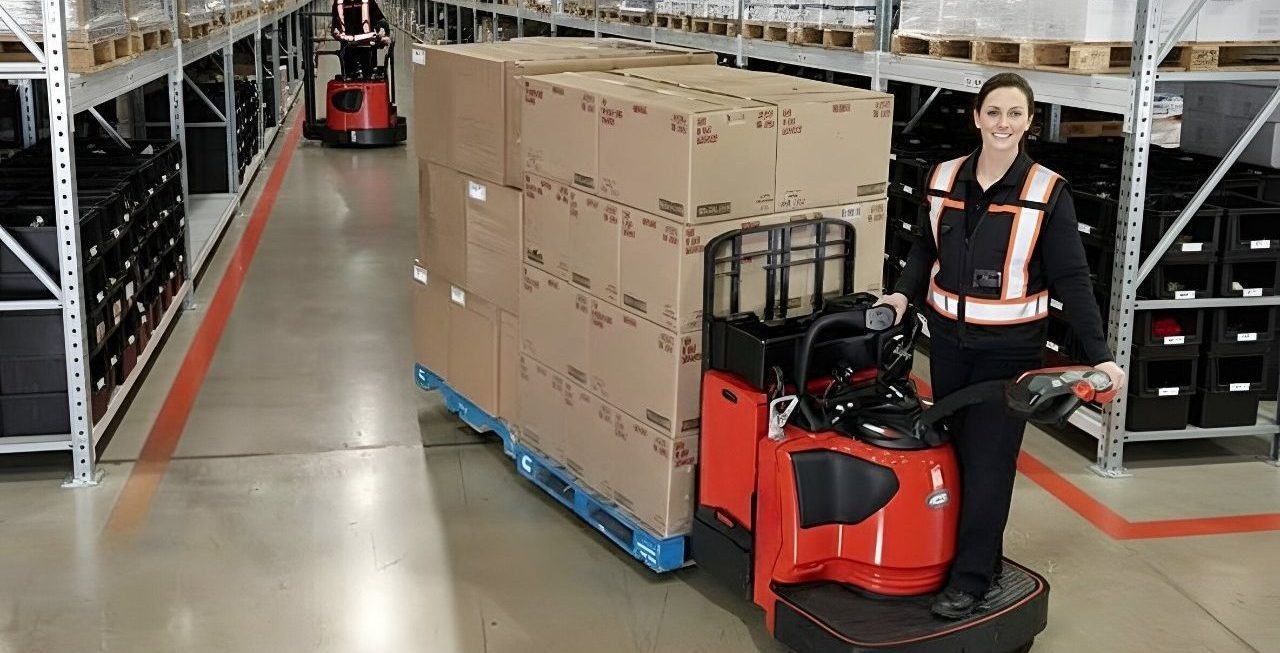
1. Superior Maneuverability in Tight Spaces
A class 3 forklift is designed for environments where every inch matters. Its slim profile and responsive controls make it ideal for:
- Narrow aisle storage
- Crowded staging areas
- Retail backrooms
- High-density pallet racking
2. Lower Operating and Maintenance Costs
Because many Class 3 units run on electric power, businesses benefit from:
- No fuel expenses (compared to gas or diesel units)
- Reduced maintenance—fewer moving parts and no combustion engine
- Longer equipment lifespan, especially for electric pallet forklifts
- Lower total cost of ownership, a major advantage when evaluating a forklift for sale
3. Improved Worker Safety and Ergonomics
Walk-behind and stand-on controls reduce operator fatigue and support better visibility. A class 3 forklift is easier to learn, easier to control, and safer in tight or high-traffic areas because:
- Operators remain upright and aware of surroundings
- Lower travel speeds reduce collision risks
- Electric braking enhances stopping control
- Minimal lifting/straining lowers injury potential
4. High Versatility Across Industries
One of the reasons Class 3 models are so widely used is their adaptability. Industries that rely heavily on pallet movement, including retail, e-commerce, food and beverage, logistics, and distribution, use class 3 forklifts daily to streamline operations.
They pair well with other forklift types too, such as a class 4 forklift for heavy loads or long-distance travel, creating a balanced and efficient fleet.
What to Look for When Buying a Class 3 Forklift (Expert Buying Guide)
Experienced buyers evaluate a mix of technical and practical factors to ensure the equipment enhances productivity rather than slows it down.
Key Factors to Consider Before Purchasing a Class 3 Forklift
✔ Load Capacity & Pallet Requirements
Always confirm the forklift can safely handle your heaviest pallet loads. Undersizing capacity is one of the most common—and costly—mistakes when choosing among different forklift types.
✔ Battery Life, Charging, and Power System
For electric pallet forklifts:
- Look for long cycle times
- Evaluate charger compatibility
- Consider multi-shift charging needs
- Review battery health when buying used
✔ Durability & Build Quality
Check for:
- Reinforced forks
- Sturdy frames
- Smooth, reliable electric motors
- High-quality wheels that reduce wear
✔ Safety Features That Protect Your Workforce
A class 3 forklift should include:
- Emergency stop buttons
- Horn and audible alerts
- Speed governors
- Ergonomic handles and controls
- Clear sightlines for tight aisles
✔ Maintenance Access & Serviceability
Easy-to-service components mean lower downtime. Confirm that:
- Replacement parts are readily available
- Service technicians understand your model
- Preventive maintenance requirements are reasonable
What Businesses Should Know Before Browsing a Forklift for Sale
When evaluating a forklift for sale, whether you’re comparing a class 3 forklift or a class 4 forklift, due diligence is essential. Each detail can affect long-term performance and operational safety.
Checklist for Evaluating Any Forklift for Sale
- Equipment condition: New, reconditioned, or used
- Operating hours: Lower hours often indicate less wear
- Battery age & cycles: A critical value factor for electric models
- Structural condition: Forks, frame, mast, hydraulics
- Dealer transparency: Clear inspection records, warranties, and service history
How to Compare Listings When Searching for a Fork Truck for Sale
Shopping for a fork truck for sale requires more evaluation than typical online equipment listings. You’re not just buying machinery—you’re choosing a long-term operational asset.
Key Factors to Compare Between Fork Truck Listings
- Price vs. projected lifespan: Look beyond upfront cost
- Dealer service commitments: Maintenance, parts, emergency support
- Maintenance records: Well-documented history is a major advantage
- Parts availability: Ensures quick repairs and long-term sustainability
- Facility compatibility: Aisle widths, floor type, load demands
Frequently Asked Questions | Buying a Forklift for Productivity and Cost Savings
What’s the average lifespan of a class 3 forklift?
A class 3 forklift typically lasts 7–10 years depending on usage, maintenance, and environment. Choosing a well-maintained forklift for sale from a reputable dealer can extend its usable life.
Can a class 3 forklift be used outdoors?
Class 3 forklifts are primarily designed for indoor use, but they can operate outdoors on smooth, level surfaces. If your operations require frequent outdoor work, a class 4 forklift or other outdoor-rated forklift types may be a better fit.
How much training is required to operate a pallet forklift?
Operators must complete OSHA-compliant training, but most workers learn to use a pallet forklift quickly due to its simple walk-behind or stand-on controls.
Is it better to buy a new or used class 3 forklift?
It depends on your budget and workload. A new model offers the latest features, while a used fork truck for sale can be more cost-effective if purchased from a trusted dealer with documented service history.
What industries benefit most from class 3 forklifts?
Retail, e-commerce, food distribution, logistics, and manufacturing rely heavily on class 3 forklifts for fast pallet movement. Their compact size makes them ideal for tight aisles and high-volume operations across many forklift types.
Find the Best Forklift for Your Business Today
Businesses across Lauderdale Lakes and South Florida trust Almeida Forklifts for dependable equipment, responsive service, and local expertise in material handling solutions. Almeida offers a complete range of forklift services, including:
- Used Forklift Sales. Quality inspected and refurbished forklifts with flexible financing options to help you secure the right equipment for your operation.
- Forklift Rentals. Short- and long-term options with fully serviced units to keep your work on schedule.
- Preventative Maintenance & Repairs: Class 3 and Class 4 preventative maintenance, 36-point inspections, and expert repairs on major brands to reduce breakdowns and extend equipment life.
- Parts & Service Support: Access to genuine and hard-to-find parts to support forklift uptime and compliance.
With a commitment to fast response times and a strong reputation for customer satisfaction, Almeida Forklifts helps businesses keep their operations moving.