
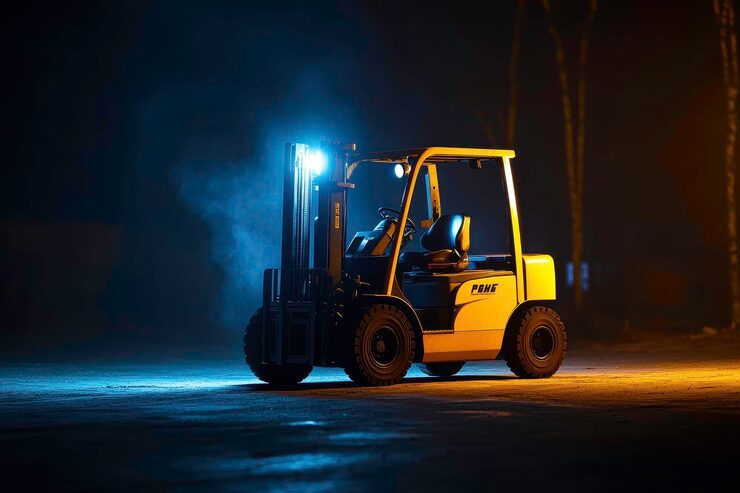
When you walk into a busy warehouse, one of the first things you notice is the movement—forklifts zipping around aisles, operators navigating blind corners, and employees on foot trying to stay focused on their tasks. In this environment, safety isn’t just a priority—it’s a necessity.
One small but powerful piece of forklift safety equipment making a big difference is the forklift blue light, sometimes called a blue safety spotlight. But what exactly is it, and how does it work? Let’s break it down.
Table of Contents
Key Takeaways
✔ Forklift blue lights give clear visual safety warnings.
✔ They help prevent collisions in high-traffic areas.
✔ OSHA doesn’t require them but encourages hazard prevention.
✔ LED lights are durable, low-maintenance, and cost-effective.
✔ They work best alongside other forklift safety equipment.
What is Blue Light and How Does it Work
A forklift blue light is a safety device mounted on the front, rear, or both ends of a forklift. It projects a bright blue beam of light onto the ground several feet ahead or behind the vehicle, alerting nearby pedestrians and other operators that a forklift is approaching.
Unlike horns or alarms, which rely on sound, the blue spotlight provides a visual warning system that works even in loud, distracting environments. It’s one of the most effective and affordable ways to improve workplace safety.
How Does a Forklift Blue Light Work?
Projection and Visibility
The blue light works by projecting a highly visible spot—usually 15 to 20 feet in front or behind the forklift—onto the warehouse floor. This gives pedestrians and other equipment operators a clear, early warning of moving forklifts before they enter a potential collision path.
Placement on the Forklift
These lights are typically installed on the overhead guard of the forklift. Depending on your facility’s layout, you can mount them facing forward, backward, or both directions to maximize coverage. Correct placement ensures the light’s beam is projected where pedestrians are most at risk—such as blind corners or busy aisles.
Technology Behind the Light
Most blue safety spotlights use LED technology, which is bright, energy-efficient, and durable enough to handle the vibration and demands of industrial environments. LEDs also last thousands of hours, making them a low-maintenance investment for forklift safety.
5 Benefits of Forklift Blue Lights in Different Work Environments
Not all workplaces face the same hazards, and forklift blue lights adapt to each setting by enhancing visibility and awareness where it matters most. By projecting a clear warning spot on the ground, they reduce blind spots, prevent collisions, and support safer workflows across industries.
1. Warehouses and Distribution Centers
In large warehouses, forklifts often move quickly through narrow aisles and intersections filled with both workers and equipment. Blue lights provide early warning for pedestrians and operators who may not see or hear a forklift coming. This is especially valuable during peak shipping seasons when traffic levels are high and distractions are common. Forklift blue lights also help reduce bottlenecks by improving flow at cross-aisle intersections.
2. Manufacturing Facilities
Manufacturing plants are typically filled with machinery, conveyors, and assembly lines, which can create blind corners and high background noise. Employees working at fixed stations may not be paying attention to floor traffic. A blue light cutting across their line of sight immediately alerts them to approaching forklifts. In facilities with shift changes or multiple work crews, these visual cues provide consistent, non-verbal warnings that keep everyone safer.
3. Outdoor Yards
Forklift operations often extend beyond indoor warehouses into shipping yards, loading docks, or construction areas. Outdoor environments add challenges such as poor lighting, uneven surfaces, and variable weather. Blue lights remain visible in dim or low-light conditions, making them critical during early morning or late evening operations. They can also help drivers and pedestrians coordinate movement in shared spaces like staging areas or truck-loading zones.
4. Retail Stockrooms
In retail environments, forklifts may share confined back-of-house spaces with stockroom employees, managers, or even seasonal workers who aren’t accustomed to forklift traffic. Blue lights clearly mark forklift paths, reducing the chance of surprise encounters in narrow aisles or when entering and exiting through swinging stockroom doors. This is particularly important during busy shopping seasons when both pedestrian and equipment traffic increase dramatically.
5. Specialized Environments
Beyond these common applications, forklift blue lights also benefit:
- Cold Storage Warehouses – Where fog or frost can impair visibility, the blue beam cuts through low-contrast conditions.
- Airports and Logistics Hubs – Where forklifts move baggage, cargo, and supplies in areas crowded with personnel and ground vehicles.
- Food & Beverage Facilities – Where sanitation requirements often limit the use of loud alarms, making silent visual signals more effective.
OSHA Forklift Safety Light Requirements
OSHA does not specifically mandate the use of blue forklift lights. However, under the General Duty Clause, employers are required to provide a workplace free from recognized hazards. This means that if forklift operations pose a risk to pedestrian safety, companies should take proactive steps—like installing safety lights—to minimize danger.
While not legally required, blue safety spotlights are widely recommended by safety professionals as a best practice for OSHA compliance and overall workplace safety.
Choosing the Right Blue Safety Spotlight for Your Forklift
Key Features to Look For
When selecting a forklift safety light, consider:
- Brightness (measured in lumens)
- Beam distance
- Mounting flexibility
- Weather-resistant (for outdoor use)
Matching Lights to Your Warehouse Environmen
- Indoor warehouses: A single rear or front-mounted light may be sufficient.
- High-traffic areas or outdoor yards: Dual lights (front and rear) are recommended to maximize visibility.
Cost vs. Safety Benefits
Forklift blue lights are a relatively small investment compared to the cost of workplace accidents, OSHA fines, or equipment damage. The ROI is clear: greater safety, fewer incidents, and peace of mind.
5 Common Mistakes to Avoid When Using Forklift Safety Lights
Even with the right equipment, improper installation or reliance on safety lights alone can reduce their effectiveness. To maximize the impact of forklift blue lights, avoid these common pitfalls:
1. Installing Lights at the Wrong Angle
If lights are mounted incorrectly, they may shine into operators’ eyes, create glare on reflective surfaces, or miss the intended projection zone on the floor. A poorly aligned light beam defeats the purpose of a clear visual warning. Always follow manufacturer guidelines for mounting height and angle, and test the beam in high-traffic areas to ensure maximum visibility without distractions.
2. Relying Solely on Safety Lights Without Training
Blue lights are highly effective, but they are not a replacement for comprehensive safety training. Pedestrians and operators must understand what the blue spotlight means and how to respond when they see it. Without awareness training, workers may ignore or misinterpret the warning. Combining safety lights with ongoing forklift training programs ensures consistent, safe reactions across the workforce.
3. Using Weak or Low-Quality Lights
Not all safety lights are created equal. Bargain options may have limited projection range, dim brightness, or poor durability under heavy vibration. In large or brightly lit warehouses, a weak light may blend into the environment and fail to catch attention. Investing in industrial-grade LED lights with strong lumens, vibration resistance, and long lifespans ensures reliability in demanding conditions.
4. Failing to Inspect and Maintain the Lights
Like any safety equipment, forklift lights require upkeep. Dust, debris, and wear can dim the projection over time, while loose wiring or brackets can shift the light out of alignment. Without routine checks, a once-effective safety light can become nearly useless. Incorporate safety light inspections into scheduled forklift maintenance and replace bulbs or units before they fail.
5. Overlooking Environmental Conditions
Some workplaces rely on a single setup for all forklifts, but environments vary. For example, outdoor operations may need weather-resistant housings, while cold storage facilities require lights that function in freezing temperatures. Ignoring these conditions can shorten equipment life and reduce safety effectiveness. Always choose lights designed for the specific environment in which they’ll be used.
Frequently Asked Questions (FAQs)
1. What is a forklift blue light used for?
A forklift blue light is a safety device that projects a bright blue beam of light on the floor several feet in front of or behind a forklift. Its purpose is to alert pedestrians and other equipment operators that a forklift is approaching, helping to prevent accidents in busy or noisy work environments.
2. Are forklift safety lights required by OSHA?
OSHA does not specifically mandate the use of blue forklift lights. However, under the General Duty Clause, employers must provide a workplace free from recognized hazards. If forklift operations pose risks to pedestrians, installing safety lights is considered a best practice to enhance compliance and improve safety.
3. How do forklift blue lights work in warehouses?
Forklift blue lights use durable LED technology to project a highly visible spot—typically 15 to 20 feet ahead or behind the vehicle. This visual signal gives workers an early warning of forklift movement, especially around blind corners, intersections, or in noisy warehouse environments where horns may not be heard.
4. Where should forklift safety lights be mounted?
Most blue safety spotlights are installed on the overhead guard of the forklift, facing forward, backward, or both. The placement depends on the facility’s layout. High-traffic areas or warehouses with frequent pedestrian activity often benefit from both front and rear-mounted lights for maximum visibility.
5. What other forklift safety equipment should businesses consider?
Forklift blue lights are just one piece of a comprehensive safety strategy. Businesses should also consider backup alarms, mirrors, cameras, reflective tape, and operator training. When combined, these measures help reduce accidents, improve pedestrian awareness, and support OSHA compliance.
Take Action to Improve Forklift Safety
A forklift blue light may be small, but its impact on workplace safety is significant. By projecting a clear visual warning on the ground, it helps prevent accidents, enhances pedestrian awareness, and supports OSHA compliance.
Whether you oversee a small warehouse or a large distribution center, taking proactive steps with the right forklift safety solutions is one of the smartest ways to protect your team. And in South Florida, Almeida Forklifts is your trusted partner for expert support and guidance.
If you’re looking to improve your warehouse safety program, Almeida Forklifts in Lauderdale Lakes, FL is here to help. Our team specializes in forklift rentals—available for both short- and long-term needs—along with maintenance and safety solutions that keep your operation running smoothly and in line with OSHA standards.
Contact Almeida Forklifts today to learn more about forklift safety options, maintenance support, and equipment guidance tailored to your facility.