
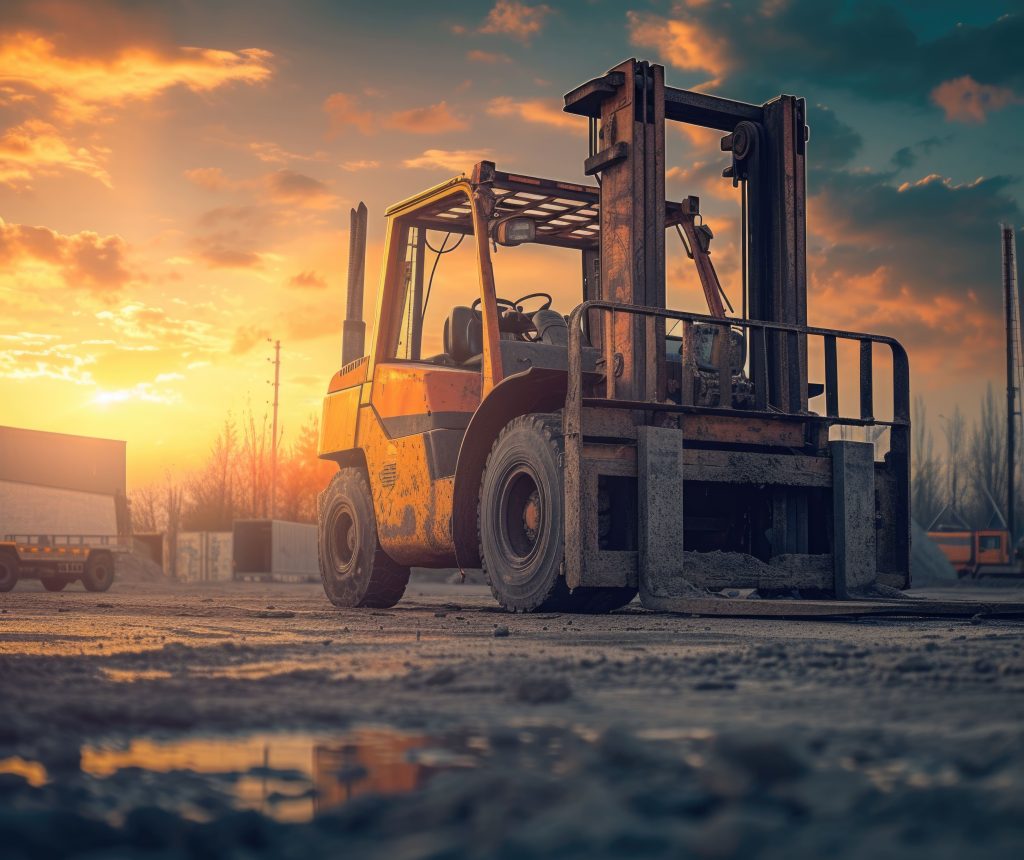
Forklifts are essential to keeping daily operations moving in industries like construction, logistics, warehousing, and agriculture. To keep up with the competition, businesses need more than just access to equipment—they need a partner who understands their challenges and supports their long-term success. A dependable forklift dealer offers not only machines but also expert advice, responsive service, and flexible solutions that adapt as the business grows.
Here are the top reasons to work with a forklift dealer in Florida that goes the extra mile.
Table of Contents
Key Takeaways
✔ Forklifts move heavy materials efficiently across rough terrain, reducing manual labor and speeding up workflow.
✔ Forklifts lift materials to elevated areas, like rooftops and scaffolds, making vertical transport faster and safer.
✔ Forklifts handle loading and unloading of supplies, streamlining daily deliveries and material staging.
✔ Forklifts assist with waste management, transporting debris and keeping the site clean and hazard-free.✔ Forklifts support specialized tasks using attachments, allowing safe handling of delicate or custom materials.
How Forklifts Work
Forklifts are powered industrial trucks designed to lift, move, and transport heavy materials with precision and safety. They are engineered to perform efficiently across a range of environments, from smooth factory floors to rugged construction terrain. The functionality of forklifts varies by model and industry application, but their fundamental purpose remains the same: moving heavy loads with ease.
For instance, what is a forklift used for in manufacturing plants? In those settings, forklifts transport raw materials to production lines, transfer semi-finished goods between stations, and shift completed products to storage areas. These vehicles maintain workflow efficiency and reduce the physical burden on workers.
Similarly, what is a forklift used for in shipping and receiving operations? The answer lies in logistics. Forklifts are responsible for unloading incoming freight, stacking goods in organized layouts, and prepping outbound shipments for transport. Their reliability in tight spaces and heavy-duty lifting makes them ideal for loading docks and distribution centers.
Yet, in construction, forklifts face a unique set of challenges—outdoor elements, uneven terrain, and constantly changing environments. This is where their design flexibility and power make the biggest impact.
What Is a Forklift Used for in Construction Sites?
Forklifts are versatile, durable machines that meet the ever-changing demands of construction projects. On active job sites where materials arrive daily, layouts evolve, and timing is critical, forklifts offer unmatched support for logistics, staging, and movement of goods. These machines are designed to save time, reduce physical strain, and improve job site flow—making them essential for nearly every phase of a build.
Here are the primary answers to the question: What is a forklift used for in construction sites?
1. Transporting Heavy Materials
One of the most common uses of forklifts on construction sites is moving heavy materials. These materials might include rebar, steel beams, concrete blocks, bricks, or lumber. Forklifts are designed to carry these loads across uneven, unfinished surfaces that are typical of active construction zones.
This capability significantly reduces manual labor and minimizes the time it takes to move materials from one part of the job site to another. Their use not only boosts productivity but also decreases the likelihood of workplace injuries caused by improper lifting.
2. Assisting with Vertical Lifting
Construction sites often require materials to be lifted to elevated areas such as rooftops, upper floors, or scaffolding platforms. Forklifts—especially telescopic handlers or boom-style models—are equipped to handle these lifting tasks efficiently. Instead of relying on cranes for every lift, forklifts provide a faster and more flexible way to move materials vertically.
This makes them ideal for tasks that require frequent lifting to mid-level heights, such as installing roofing tiles or transporting window frames. Vertical lifting with forklifts also supports safer working conditions by delivering materials exactly where they’re needed.
3. Loading and Unloading Supplies
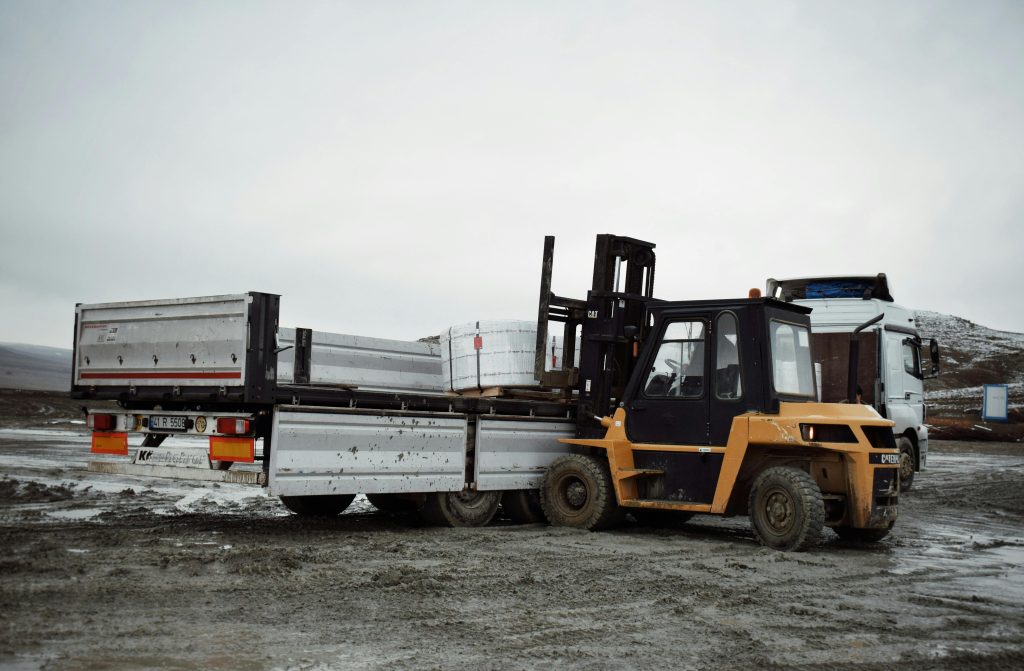
Forklifts play a major role in the loading and unloading of supplies that arrive throughout the construction process. Whether it’s unloading heavy pallets from flatbed trucks or transporting bundles of tools into site storage, forklifts are built to manage the high volume of materials that pass through the site daily.
This process closely resembles what a forklift is used for in shipping and receiving operations. In both cases, forklifts improve efficiency by quickly moving goods between delivery vehicles and their next destination. On a construction site, this could be a storage container, a staging zone, or the exact point of use.
4. Waste Management and Cleanup
Forklifts contribute significantly to keeping construction sites clean and hazard-free. As work progresses, job sites generate scrap wood, broken bricks, metal offcuts, and packaging waste. Forklifts can be used to transport this waste to centralized collection areas or load it into dumpsters.
By keeping debris off the ground and away from workspaces, forklifts help maintain a safer and more efficient environment. They are also useful at the end of a project, when final cleanup and removal of temporary structures or leftover materials must be done quickly.
5. Supporting Specialized Tasks
Construction work sometimes involves handling unique or sensitive materials that require special attention. Forklifts can be equipped with attachments such as fork extensions, clamps, or rotators to accommodate these needs. For instance, they may be used to carry large panels of drywall without damage, lift pre-cast concrete forms into position, or move barrels of industrial compounds.
These specialized tasks highlight the forklift’s adaptability and its importance beyond general transport work. The ability to customize forklifts for task-specific applications adds to their value on construction sites.
4 Most Common Forklift Types on Construction Sites
Different job sites call for different forklift models. Each type offers unique capabilities tailored to terrain, reach, and load requirements.
1. Rough Terrain Forklifts
Designed for the outdoors, rough terrain forklifts are built with oversized tires and reinforced frames. They maintain stability over gravel, mud, and uneven surfaces—making them ideal for construction sites. When asking, what is a forklift used for in construction sites?, this type is often the answer for groundwork and heavy-duty tasks.
2. Telescopic Handlers (Telehandlers)
These hybrid machines combine features of cranes and forklifts. With an extendable boom, telehandlers lift materials to high elevations—perfect for roofing, multi-story buildings, and structural framing. Their reach and precision make them ideal for tasks where vertical access is essential.
3. Counterbalance Forklifts
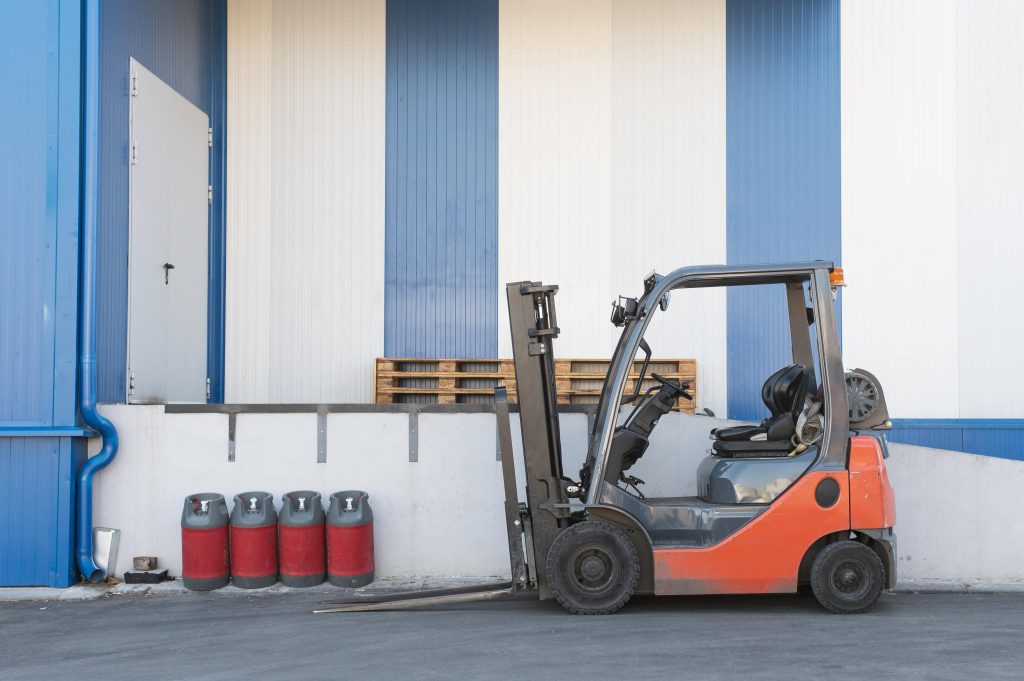
What is a forklift used for in shipping and receiving operations? These are the most common forklift types, with a simple, balanced design. They’re used where the ground is relatively level, such as indoor storage areas, warehouses, or paved construction zones. Counterbalance models perform especially well in environments similar to what a forklift is used for in manufacturing plants, where tight maneuvering is required.
4. Truck-Mounted Forklifts
Attached to delivery trucks, these forklifts provide mobility across multiple job sites. When supplies are delivered, truck-mounted forklifts unload materials without requiring separate site equipment. This portable option is especially helpful for small- to mid-size construction projects.
Top 6 Benefits of Using Forklifts in Construction
Forklifts do more than just lift and move materials—they play a central role in making construction projects safer, faster, and more cost-effective. From navigating tough terrain to streamlining deliveries, their impact is seen in every phase of a build. Below are the top six benefits that explain why forklifts are indispensable on construction sites.
1. Increased Efficiency
- Faster Transport: Forklifts significantly reduce the time it takes to transport materials across the job site.
- Labor Optimization: By speeding up repetitive transport tasks, they allow teams to stay focused on skilled labor like framing, installing, or finishing.
- Output Scaling: With multiple forklift types available, crews can handle more in less time, even in large or multi-phase projects.
2. Enhanced Safety
- Reduced Manual Lifting: Manual lifting of heavy materials increases the risk of back injuries and muscle strains.
- Controlled Handling: Forklifts help enforce safety by minimizing direct contact with awkward or dangerous loads.
- Accident Prevention: Their precision and stability reduce incidents compared to makeshift lifting setups like ropes or hoists.
- Safety Risk Context: In 2023, forklifts were involved in 67 work-related fatalities and contributed to 24,960 DART (Days Away, Restricted, or Transferred) cases during 2021–2022, including 15,480 incidents that resulted in days away from work (DAFW). This makes proper use and certified training not just a legal requirement—but a life-saving one.
- Site Clearance: Forklifts also reduce site congestion by quickly clearing staging zones or debris areas.
3. Adaptability on Challenging Terrain
- All-Terrain Navigation: Construction environments are rarely uniform—mud, gravel, slopes, and narrow paths are common obstacles.
- Task-Specific Customization: Rough terrain forklifts are built to navigate these areas while maintaining balance and performance.
- Attachment Versatility: Attachments such as fork extensions, clamps, and rotating forks allow operators to adjust forklifts to task-specific needs.
- Flexible Functionality: Their adaptability answers: what is a forklift used for in construction sites?—they are customized tools for customized environments.
4. Support for Workflow Continuity
- Material Availability: Forklifts ensure that materials are always available where and when they are needed.
- Delay Reduction: This helps avoid costly work stoppages caused by missing materials or delivery bottlenecks.
- Phase Coordination: By keeping the job site supplied and orderly, forklifts allow project phases to flow smoothly from one stage to the next.
5. Cost Savings and Budget Control
- Lower Labor Costs: Reducing labor hours spent moving materials manually cuts overall job costs.
- Minimized Delays: Fewer delays, fewer injuries, and better coordination all contribute to staying under budget.
- Equipment Substitution: Forklifts often eliminate the need for more expensive equipment like cranes for short-range or medium-lift tasks.
- Long-Term Value: Their durability also means they require fewer repairs or replacements over the course of a long-term build.
6. Cross-Industry Utility and Knowledge Transfer
- Proven Practices: Forklift use in construction draws from their proven success in logistics and manufacturing.
- Process Familiarity: Concepts like supply chain timing, safe load stacking, and efficient movement of goods are directly transferable.
- Ease of Training: This makes it easier to train staff who have used forklifts in other industries, such as manufacturing plants or shipping and receiving operations.
How Forklifts Differ Across Industries
To fully understand the importance of forklifts on construction sites, it’s valuable to compare how they are used in other industries, particularly manufacturing plants and shipping and receiving operations. While the core function remains consistent—moving heavy materials safely and efficiently—each environment presents unique challenges and workflows.
Manufacturing Plants
So, what is a forklift used for in manufacturing plants? In these controlled environments, forklifts play a vital role in keeping operations flowing smoothly.
- Raw Material Delivery: Forklifts move raw materials from storage to production areas, ensuring each assembly station remains stocked with essential components.
- Internal Material Transfers: Operators use forklifts to shift semi-finished parts between different departments, such as from molding to machining or from painting to inspection.
- Finished Goods Movement: Once products are complete, forklifts transport them to packaging stations or outbound loading zones for distribution.
- Inventory Restocking: Forklifts are also used to replenish work-in-progress bins or restock inventory on internal racks or floor-level storage systems.
- Compact Maneuvering: Because manufacturing floors are typically smooth and standardized, forklifts used here are more compact, allowing for tight turns and high-precision movement.
- Indoor Optimization: These forklifts are often electric or low-emission, optimized for indoor use without the need to navigate rugged or uneven terrain.
- Operational Efficiency: In answering what is a forklift used for in manufacturing plants?, the main goal is uninterrupted flow—keeping machines and workers supplied without delay.
- Injury Statistics Insight: The manufacturing industry reports the highest number of forklift-related severe injuries, accounting for 33% of such incidents. This underscores the need for strict safety standards and operator training.
Shipping and Receiving Operations
When asking, What is a forklift used for in shipping and receiving operations?, the answer centers on organized logistics and fast-paced material handling. Forklifts in this sector are designed to perform repetitive, high-volume tasks with consistency.
- Truck Unloading: Forklifts quickly unload shipments from incoming delivery trucks, removing pallets, crates, or boxed goods efficiently.
- Product Stacking: Operators use forklifts to stack inventory onto warehouse shelves, often reaching multiple levels of racking systems.
- Outbound Loading: These forklifts handle outbound logistics by positioning packed goods onto trucks in the correct order and orientation.
- Inventory Sorting: Forklifts are also used to move goods to specific zones based on delivery schedules, destinations, or product categories.
- Standardized Layout Navigation: Because shipping facilities are usually structured with marked aisles and predictable paths, forklifts in this context are built for high maneuverability and repeatable movements.
- Time-Sensitive Operations: In fulfilling what a forklift is used for in shipping and receiving operations, speed and scheduling accuracy are critical for supply chain performance.
- Equipment Uniformity: Forklifts in logistics hubs often follow strict specifications to meet industry compliance for load handling, emissions, and efficiency.
Construction
- Environment: Construction sites are unpredictable and vary daily. In contrast, manufacturing and logistics settings are consistent and structured.
- Equipment Type: Construction forklifts are rugged, often larger, and built to handle weather, terrain, and outdoor exposure. Manufacturing and shipping forklifts are smaller, faster, and designed for smooth surfaces.
- Operational Rhythm: While manufacturing and logistics aim for repetition and flow, construction demands adaptability, creative movement, and reactive logistics.
- Cross-Sector Core Value: Regardless of industry, forklifts deliver efficiency, reduce manual effort, and improve workplace safety. The context may differ, but their purpose remains strong.
How to Choose the Right Forklift for Your Construction Needs
Selecting the appropriate forklift is crucial for maximizing efficiency and safety on-site. Several factors influence the decision-making process. When evaluating these variables, keep returning to the central question: What is a forklift used for in construction sites? The answer will help guide the best model choice for the task at hand.
1. Evaluate Terrain and Environment
Is the work site paved, rocky, or muddy? Rough terrain forklifts are necessary for unpaved areas, while counterbalance models can be used in more controlled environments.
2. Consider Load Type and Height
Forklifts must match the weight and size of typical materials used. For projects that require elevated access, such as roofing or multi-story builds, a telehandler may be ideal.
3. Factor in Project Duration
For short-term jobs, renting a forklift can be more cost-effective. For longer or recurring projects, purchasing may be a better investment.
4. Assess Attachments and Features
Attachments like fork extensions, rotators, and clamps expand forklift functionality. Choosing the right features ensures the equipment meets job-specific needs.
5. Consult Equipment Experts
Equipment dealers and rental agencies can offer expert advice on which forklift models fit specific construction applications. Site managers should also factor in training and operator certification as part of the equipment planning process.
Frequently Asked Questions
What is a forklift used for in construction?
A forklift is used on construction sites to lift, move, and transport heavy materials like bricks, steel, lumber, and equipment. It helps with loading, unloading, vertical lifting, and site cleanup. Forklifts improve safety, save time, and support workflow across all stages of a construction project.
What is the main purpose of a forklift?
The main purpose of a forklift is to move heavy loads safely and efficiently over short distances. It is commonly used to lift, stack, and transport materials in various industrial settings. Forklifts help reduce manual labor and increase productivity in logistics, manufacturing, and construction.
What does OSHA require for a forklift?
OSHA requires that all forklift operators be trained and certified before operating the equipment. Employers must provide site-specific and equipment-specific training. OSHA also mandates regular equipment inspections and adherence to safety procedures during use.
What is the most commonly used forklift?
The most commonly used forklift is the counterbalance forklift. It features a straightforward design with forks at the front and a counterweight at the back for stability. This type is ideal for indoor and outdoor use on flat, even surfaces.
What industry uses forklifts the most?
The warehousing and logistics industry uses forklifts the most due to the high volume of material handling required. Forklifts are vital for loading, unloading, and organizing goods. Manufacturing and construction also rely heavily on forklifts for efficient operations.
Get Reliable Forklift Support from Almeida Forklifts in Lauderdale Lakes, FL!
If you’re managing a construction project in need of dependable material handling solutions, trust Almeida Forklifts in Lauderdale Lakes, FL, to deliver the right equipment for the job. Whether you’re lifting heavy loads, staging materials, or cleaning up debris, Almeida Forklifts offers rugged and efficient forklifts designed specifically for your worksite challenges.
For expert advice and trusted service, contact Almeida Forklifts in Lauderdale Lakes, FL—your local forklift partner for safe and streamlined construction operations.